Brushed vs Brushless Motor for Standing Desks: Which One Is Better?

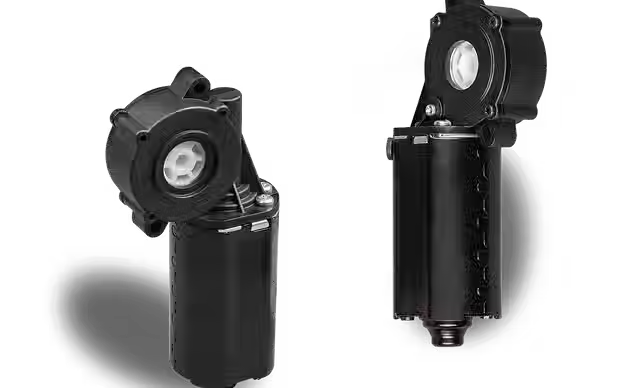
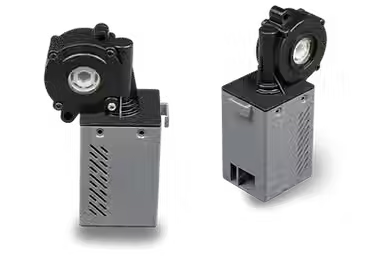
If you are choosing between a standing desk with a brushed motor and one with a brushless motor, the better option is usually the brushless motor. In most standing desk applications, brushless motors are associated with quieter operation, smoother lifting, lower maintenance, and longer-term durability. A brushed motor can still be acceptable in entry-level or cost-sensitive desks, but for buyers who care about performance and long-term ownership, brushless is typically the stronger choice.
Key Takeaways
A brushed motor uses physical brushes to transfer electricity inside the motor.
A brushless motor uses electronic control instead of brushes.
In standing desks, brushless motors are generally quieter, smoother, and lower maintenance.
Brushed motors may still work for lower-cost desks or lighter-use settings.
Motor type matters, but overall desk quality also depends on frame design, control system, lifting columns, and build consistency.

What Is a Brushed Motor?
A brushed motor is an electric motor that uses carbon brushes and a commutator to deliver electrical current to the moving parts inside the motor. This is an older and widely understood motor design.
In practical terms, a brushed motor is functional and proven, but it includes physical contact parts that wear down over time. That wear is one reason brushed motors are often associated with more maintenance and more friction than brushless designs.
For standing desks, that means a brushed motor can still raise and lower the desk effectively, but it may not feel as refined over years of regular use.
What Is a Brushless Motor?
A brushless motor is an electric motor that does not use physical brushes to transfer current. Instead, it relies on electronic control to manage motor movement.
This design reduces internal friction and removes a wear-prone component from the system. In standing desks, that often translates into quieter operation, better efficiency, smoother movement, and less maintenance over time.
A brushless motor standing desk is usually positioned as a higher-end product because the motor technology supports a more premium ownership experience.
Brushed vs Brushless Motor: The Core Difference
The simplest way to understand the difference is this:
Brushed motors use physical contact inside the motor.
Brushless motors use electronic control instead of physical brushes.
That technical difference matters because it affects how the motor behaves in real-world use. In a standing desk, buyers are not usually shopping for a motor in isolation. They are shopping for an everyday experience: how quiet the desk sounds, how smooth it moves, how often it needs service, and how well it holds up after repeated height adjustments.
That is why this comparison matters more than it may seem at first glance.
Why Motor Type Matters in a Standing Desk
A standing desk motor is not just a hidden component. It shapes how the desk performs every day.
Noise
Noise is one of the most noticeable differences. Brushless motors are generally preferred when buyers want a quieter standing desk. That can matter in home offices, shared workspaces, executive offices, libraries, and open-plan commercial environments.
Brushed motors can still be perfectly usable, but they may produce a less refined operating sound because of their internal contact design.
Smoothness
A good standing desk should move in a stable, controlled way. Brushless motors are often associated with smoother starts, stops, and transitions. That can improve the perceived quality of the desk, especially for users who adjust height multiple times a day.
Smoothness also matters psychologically. A desk that moves cleanly feels more premium and more dependable.
Durability
Because brushed motors contain parts that physically wear during operation, they may face more long-term wear than brushless systems. Brushless motors remove that specific wear point, which is one reason they are often chosen for more demanding or premium-use environments.
That does not mean every brushless desk will automatically outlast every brushed desk. Overall engineering still matters. But all else being equal, brushless technology usually has the long-term advantage.
Maintenance
A major appeal of brushless motors is lower maintenance. With fewer wear-based internal contact parts, there is less routine concern around brush degradation.
For the end buyer, that means one less issue to worry about over the life of the desk.
Energy efficiency
Brushless motors are generally considered more efficient than brushed motors because they reduce friction and use electronic control. In standing desks, the energy savings may not be dramatic for every user, but efficiency is still a meaningful design advantage.

Brushed vs Brushless Motor for Standing Desks: Side-by-Side Comparison
Factor | Brushed Motor | Brushless Motor |
Operating method | Uses physical brushes | Uses electronic control |
Noise | Typically louder or less refined | Typically quieter |
Smoothness | Functional, but may feel less polished | Usually smoother |
Maintenance | Higher potential maintenance over time | Lower maintenance |
Durability | More wear-prone internally | Generally better long-term durability |
Efficiency | Lower relative efficiency | Better relative efficiency |
Cost | Usually more budget-friendly | Usually more premium-priced |
Best fit | Entry-level desks, lighter use | Premium desks, daily use, higher expectations |
Featured-snippet-ready block
Which is better for a standing desk: brushed or brushless motor?For most standing desks, a brushless motor is better because it is typically quieter, smoother, lower maintenance, and more durable over time. A brushed motor may still be suitable for budget-focused desks or lighter use, but brushless is usually the stronger long-term choice.
Which Motor Is Better for Different Buyers?
Best for budget-conscious buyers
If price is the main priority, a brushed motor desk can still make sense. For users who adjust their desk occasionally and want a more affordable entry point into sit-stand furniture, a brushed motor may be enough.
The key is to judge it honestly. It may not deliver the same premium feel as a brushless model, but it can
still serve a basic use case.
Best for premium home offices
For buyers building a quieter, better-looking, better-performing workspace, brushless is usually the better fit. The benefits are most noticeable in the small details: less distracting noise, smoother travel, and a more polished daily experience.
That matters more than many buyers expect, especially once the desk becomes part of a full-time work setup.
Best for commercial or high-use environments
For offices, shared workstations, executive spaces, and other environments where desks may be adjusted frequently, brushless motors are usually the smarter investment. Lower maintenance and better long-term consistency are especially valuable when multiple users rely on the desk.
When a Brushed Motor Still Makes Sense
A brushed motor can still be the right choice when:
the desk is for occasional use
budget matters more than refinement
the user is not highly sensitive to sound
the product is positioned as an entry-level standing desk
the rest of the desk package offers acceptable value
In other words, brushed does not automatically mean bad. It usually means more basic.

When a Brushless Motor Is the Better Investment
A brushless motor is usually the better investment when:
the desk will be used daily
low noise matters
long-term durability matters
the buyer wants a premium user experience
the desk is intended for a professional or higher-end setting
the buyer prefers lower maintenance over time
For many standing desk buyers, the purchase is not just about moving the desktop up and down. It is about reducing friction in the workday. A better motor contributes directly to that goal.
What Else Matters Beyond the Motor
Motor type is important, but it is not the only factor that determines desk quality. Buyers should also look at:
Frame stability: A good motor cannot fix a weak frame.
Weight capacity: The lifting system should match the equipment load.
Column design: The lifting legs affect smoothness and stability.
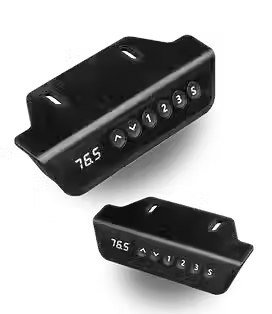
Control box and handset quality: Electronics influence responsiveness and consistency.
Warranty and support: Long-term ownership depends on service as much as hardware.
Single-motor vs dual-motor configuration: Even a strong motor type should be considered in the context of the full lifting system.
This is where strong standing desk brands separate themselves. The best desks are not built around one impressive spec. They deliver a well-engineered system.
Final Verdict: Which One Is Better?
For most buyers, brushless motor standing desks are better. They align more closely with what people want from a modern electric standing desk: quiet operation, smooth adjustment, lower maintenance, and stronger long-term value.
A brushed motor desk can still be a practical choice for entry-level use or tighter budgets. But if the goal is to buy once and buy well, brushless is usually the more confident decision.
The right question is not just, “Which motor is cheaper?” It is, “Which desk will feel better to live with every day?” In most cases, the answer points to brushless.
Soft CTA:If you are comparing standing desks for performance, not just price, look closely at motor type alongside frame stability, lifting quality, and warranty support. That combination will tell you far more than a product headline alone.
FAQ
1. Is a brushless motor better for a standing desk?
Yes, in most cases. A brushless motor is generally better for a standing desk because it is usually quieter, smoother, and lower maintenance than a brushed motor.
2. Are brushed motor standing desks bad?
Not necessarily. A brushed motor standing desk can still be a reasonable option for budget buyers or lighter use, but it may not offer the same long-term refinement as a brushless model.
3. Why are brushless motor standing desks more expensive?
They are often priced higher because brushless motor systems are generally more advanced and are commonly used in desks positioned as premium products.
4. Which motor is quieter in a standing desk?
Brushless motors are typically quieter than brushed motors, which makes them especially appealing for home offices and shared workplaces.
5. Do brushless motors last longer than brushed motors?
In general, brushless motors are considered more durable because they do not use physical brushes that wear down over time. Exact lifespan depends on the full desk design and usage conditions.
6. Should I choose motor type or desk frame first?
You should evaluate both together. Motor type matters, but frame stability, lifting columns, electronics, and warranty support are also critical to overall desk quality.


Comments