Smart Furniture Guide: Electric Adjustable Beds for Better Sleep and Recovery

Electric adjustable beds are motorized smart furniture that lets you change sleeping/recovery positions—most commonly through head and foot elevation and sometimes additional comfort zones. The main benefit is flexibility: you can adjust angles to reduce pressure, support the spine, and improve comfort during sleep or recovery routines.
This guide breaks down how electric adjustable beds work, which features matter for sleep and recovery, and what to verify for safety, power, and fit—so you can choose confidently instead of relying on vague marketing.

Key Takeaways
Electric adjustable beds let you control head elevation and foot elevation, which can improve comfort by changing pressure distribution and posture.
For recovery and day-to-day comfort, look for back/lumbar support options and dependable comfort presets (memory positions).
Safety features to confirm include anti-entrapment and an emergency release mechanism (often described as an emergency/CPR release on some models).
Choose dual motor if you want more independent control; choose single motor if simplicity and cost are priorities.
Before buying, check weight capacity, bed frame compatibility, and practical power requirements / cable clearance.
What is an electric adjustable bed base?
An electric adjustable bed base is the motorized base that sits under your mattress. Unlike a standard bed frame, it uses internal mechanisms to raise and lower sections of the bed, allowing positions to change at the push of a button.
Most commonly, you’ll see:
Head elevation: raises the upper back/torso position.
Foot elevation: raises the legs for circulation/comfort and reduces pressure on heels for many users.
Additional zones on some models (for example, lumbar/back support or more advanced multi-section tilts).
Head and foot elevation
Head and foot elevation work together to control posture. Raising the head can help some people feel more comfortable when lying back; adjusting the feet can reduce strain and make long nights easier to tolerate.
Zero gravity bed positions—what they are (and aren’t)
A zero gravity bed position typically aims to distribute body weight more evenly by combining head and foot angles. You may see it described as a “floating” or stress-reducing posture preset.
Important: zero gravity is a comfort concept, not a medical guarantee. If you’re using the bed for recovery, focus on the specific angles you tolerate comfortably rather than assuming one preset solves everything.
How electric adjustable beds work
Motors, actuators, and adjusting zones
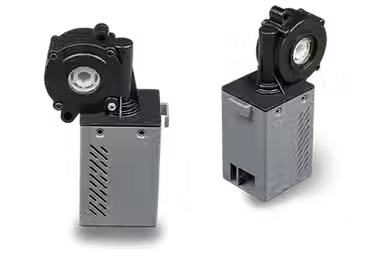
Inside an electric base are one or more motors that drive actuators (linear movements) to raise/lower bed sections. The number of motors often determines how independently the bed can adjust.
Single motor setups typically handle fewer degrees of independent movement.
Dual motor setups usually allow more independent control of head vs. foot zones (and can support more nuanced comfort combinations).
Smart adjustable bed controls: remote, presets, and app options
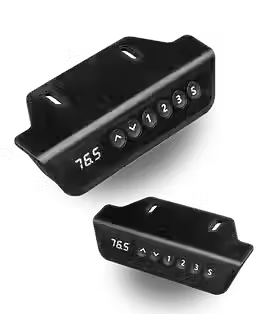
Most electric adjustable beds include a wireless remote control with preset buttons or adjustable controls. Many models also support:
memory positions (save your favorite angles),
easy one-touch adjustments, and
sometimes app control / smart home integration (availability varies by brand/model).
For caregivers or seniors, usability matters as much as functionality—large buttons, clear labels, and predictable responses reduce friction and improve safety.
What features matter most for sleep and recovery
Back support and lumbar support settings
If your primary goal is “better comfort,” prioritize spine support. Many adjustable beds offer lumbar support options or back-specific adjustments that help maintain a more neutral alignment for the user’s preferred position.
Tip: When possible, look for a bed that can comfortably support your mid-back/lower-back without forcing extreme angles.
Massage and heat features
Some electric adjustable beds include massage and heat features—usually to help with relaxation or localized comfort. When evaluating these:
confirm how intensities and durations are controlled,
check whether heat is distributed in a way that feels comfortable (not overly concentrated),
and verify safety cutoffs and maintenance guidance from the manufacturer.
If a feature is essential for your routine, treat it like a “comfort add-on,” not the core reason to choose the bed.
Anti-entrapment and emergency release/CPR release
Safety is not optional—especially if the bed will be used by seniors, people with limited mobility, or caregivers managing daily care.
When you shop, confirm whether the bed includes:
anti-entrapment mechanisms (designed to reduce pinch/entrapment risk during movement),
limit controls (preventing movement beyond safe travel),
and an emergency release mechanism. Some models describe an emergency/“CPR release” function for rapid manual disengagement of certain positions—always check the exact wording in the manual for what it does and when it’s used.

Dual motor vs single motor: which is better?
Choosing between dual motor adjustable bed and single motor is usually about control and flexibility.
Comfort control and adjustability
Dual motor: typically provides independent head and foot adjustment, which can be helpful when you want one side of the body to be in a different angle than the other.
Single motor: may be enough if you primarily use a small number of positions and prefer simplicity.
If you imagine using several comfort presets (for example: TV/lounge, “sleep,” and “recovery comfort”), dual motor often feels more intuitive.
Everyday usability for different users
For couples, consider how many people will use the bed and whether they’ll share settings. Dual motor configurations can help each person find a comfortable posture without forcing a compromise—though exact functionality depends on the model and preset design.
Smart configuration decisions (single vs split king)
Single vs split king electric bed: privacy, control, and practicality
A split king is common for adjustable beds in shared sleeping spaces. Instead of one base controlling the full length, it typically uses separate sides (so each side can be adjusted independently).
Benefits people often value:
individual comfort settings for each sleeper,
less “negotiation” when one person wants to read or elevate,
and easier caregiver adjustments.
Bed frame compatibility and mattress fit
Before purchasing, check:
whether the adjustable base is designed to match your mattress type and thickness range,
whether you need a specific base-to-mattress platform,
and whether the bed requires a compatible foundation or sits on your existing frame.
If you reuse your current mattress, confirm compatibility to avoid sagging, poor support, or misalignment with adjustable sections.
Weight capacity of adjustable beds: how to choose confidently
Weight capacity is one of the most important—and most misunderstood—spec areas.
Where weight limits show up (frame + slats + mattress)
Many spec sheets describe maximum capacity, but the “real” safety margin depends on the complete system:
the base frame,
internal slats/support structure,
and how the mattress distributes load across the moving sections.
Don’t assume “the mattress is rated for X” means the base is also safe for that same number.
What “safe capacity” should include on spec sheets [source needed]
Manufacturers should ideally describe:
maximum user weight per side or per seat,
maximum combined weight (for shared use),
and any limitations related to specific accessories or mattress types.
If your target brand doesn’t clearly state these details, treat it as a due-diligence issue and ask for clarification or consult the manual.
Power requirements / low voltage power: installation checks
What to verify before setup
Most electric adjustable beds require power to operate the motors and controls. While exact electrical specs vary by model, the practical checks are consistent:
Confirm the required input voltage and whether the bed uses a transformer/low-voltage system for operation.
Verify whether it needs a dedicated outlet or whether a surge protector is recommended by the manufacturer.
Locate the power connection so it won’t be pinched during movement.
Cable management and movement clearance
From an installation perspective, cable management matters because beds move.
Keep power cords clear of pinch zones.
Ensure enough slack so cables don’t strain.
Plan the bed placement so the remote/controller cables (if any) are not stressed.
If you’re installing multiple smart furniture devices in the same room, use consistent routing practices so users don’t tug on cables while adjusting the bed.
Featured-Snippet Block: Electric Adjustable Bed Checklist
Use this quick checklist before you buy:
Electric Adjustable Bed Checklist (Sleep + Recovery)
Confirm adjustments you need: head elevation, foot elevation, and any lumbar/back support.
Choose motor configuration: single vs dual motor based on how independent you want control to be.
Safety verification: check for anti-entrapment and emergency release/CPR release details in the manual.
Confirm weight capacity: match the base’s rated limits for shared use and your mattress system.
Check bed frame compatibility: mattress fit, thickness range, and base/platform requirements.
Power & cable setup: verify electrical specs and ensure safe cable routing/clearance.
Usability for the user: readable remote, comfortable controls, and saved presets (memory positions).

How to prevent getting stuck: safety mechanisms you should confirm
Electric beds are designed to move reliably, but movement safety requires multiple layers.
Anti-entrapment
Anti-entrapment systems typically aim to detect or reduce pinch points during motion. This is especially relevant around:
gaps between moving sections,
lower frame edges,
and foot/leg travel areas.
Always check the product documentation for what the anti-entrapment feature covers and whether it’s automatic or depends on proper setup.
Limits, obstruction detection, and emergency release
A robust adjustable bed should include:
travel limits to prevent mechanical overextension,
obstruction handling (varies by model),
and a clearly described emergency release method.
For caregivers, practice the emergency step once (with the manual nearby) so you’re not learning under stress.
Common scenarios: which bed settings to start with
You’ll get better results by starting from comfort principles and adjusting gradually.
Better sleep (head elevation + comfortable foot position)
A common starting point is a gentle head elevation posture combined with a relaxed foot position that doesn’t over-flex the hips. Use memory presets so you aren’t searching for controls every night.
If you share the bed, consider split configurations if one person frequently changes settings (reading, getting up, or repositioning).
Recovery comfort (gentle elevation and supported angles)
For recovery-focused use, many users prefer small changes rather than aggressive tilts. Focus on posture support and pressure reduction:
keep angles within what feels stable,
avoid positions that increase discomfort,
and use presets to keep changes repeatable.
Snoring/airway comfort claims—stay realistic [source needed]
You may see beds marketed for “anti-snore positions.” While some people feel subjective improvement with head elevation, results vary. If you’re evaluating such claims, rely on comfort tolerance and realistic expectations rather than assuming a single “anti-snore” angle guarantees outcomes. [source needed]
Summary: a simple way to choose the right electric adjustable bed
If you want a straightforward decision rule:
Start with your primary comfort need (sleep comfort, back support, recovery positioning).
Choose the right adjustment features (head/foot elevation and lumbar/back support).
Match control complexity to the user (single vs dual motor, presets, and remote usability).
Confirm safety mechanisms (anti-entrapment, emergency release/CPR release where applicable).
Validate fit and limits (weight capacity, mattress compatibility, and power/cable clearance).
Do those five steps, and you’ll usually land on an electric adjustable bed that performs well in daily life—not just on spec sheets.
FAQ
1) What is an electric adjustable bed base?
It’s the motorized foundation under your mattress that raises and lowers sections of the bed—most commonly head and foot elevation—using built-in motors and controls.
2) How do electric adjustable beds work?
They use one or more motors to move internal actuator mechanisms, changing the angle of the bed sections. You control the movement via a wireless remote or sometimes app-based controls.
3) Are electric adjustable beds safe for seniors?
They can be, when they’re correctly installed and when they include safety features such as anti-entrapment and an emergency release mechanism. Confirm weight capacity, check controls/limits, and ensure safe cable routing.
4) What features matter most in a smart furniture electric bed?
For most people: reliable head/foot elevation, comfortable back/lumbar support, easy-to-use smart adjustable bed controls (presets and remote clarity), and clear documentation of safety mechanisms.
5) What’s the difference between a single motor and dual motor adjustable bed?
A dual motor adjustable bed typically allows more independent control of different sections (often head vs foot), which can improve personalization. A single motor design may be simpler and sufficient for fewer preset needs.
6) How much weight can an electric adjustable bed support?
It depends on the base and the complete system. Use the manufacturer’s stated weight capacity for the specific model and installation, and don’t assume mattress ratings replace base ratings. If capacity is unclear, consult the manual or request clarification.



Comments