What Type Of Electric Motor Is Most Commonly Used In Industrial Applications?
Exploring the Versatile Uses of Electric Motors in Industry
Electric motors play a pivotal role in various industrial applications, transforming energy into mechanical power across numerous sectors. Their efficiency, reliability, and versatility make them integral to processes ranging from manufacturing to transportation. Industries have embraced electric motors because they reduce emissions and operational costs while enhancing productivity. Understanding their multifaceted uses highlights their significance in driving modern industrial advancements.
If you have any questions or are interested in our products, feel free to contact us

Common Industrial Uses
Electric motors find application in machinery like conveyor systems, pumps, and compressors. They facilitate the smooth operation of production lines, driving critical functions such as material handling and processing. Additionally, electric motors are essential in automation, enabling industries to improve efficiency and precision in tasks. Their adaptability allows for various configurations, making them suitable for different applications in diverse environments.
To meet the ultimate in efficiency and responsiveness in modern applications, many engineers and designers are turning to more specialized powertrains. If you're looking for a drive solution that combines speed and stability, the Speed-focused Motor is the ideal choice. It not only improves overall operating efficiency, but also demonstrates superior acceleration and precise control in mission-critical applications.
Benefits of Electric Motors
The integration of electric motors brings numerous advantages. They offer high energy efficiency, leading to reduced energy consumption and lower operating costs. Moreover, electric motors require less maintenance than their fossil fuel counterparts, enhancing their overall lifecycle. Their quieter operation is another crucial benefit, making workplaces safer and more pleasant.
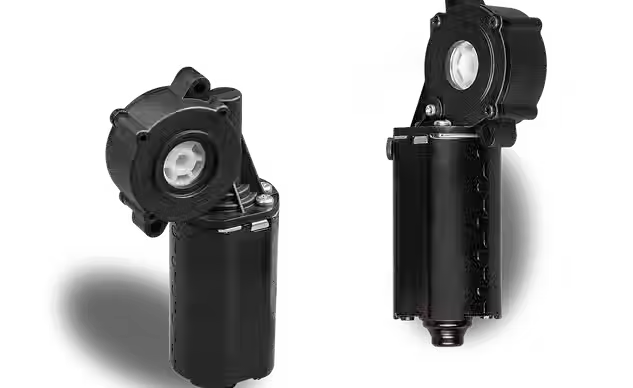
In many applications where high load capacity is required, high speed is not enough. A drive solution with strong torque output is the key, and the Torque-focused Motor is designed to cope with high loads and high resistance environments, and maintains a stable and strong power output at low speeds, which is widely used in industrial automation, heavy machinery, and lifting and lowering systems in the smart home.
Energy-efficient conversion of electric energy to motion
Reduced emissions, supporting sustainability goals
Lower maintenance requirements
Application | Industry | Advantages |
Conveyors | Manufacturing | Increased productivity |
Pumps | Water Treatment | Efficient fluid movement |
HVAC systems | Building Services | Energy savings |
Conclusion
From manufacturing to HVAC systems, electric motors exemplify the ingenuity behind modern industrial applications. Their efficiency and adaptability make them indispensable tools for businesses.
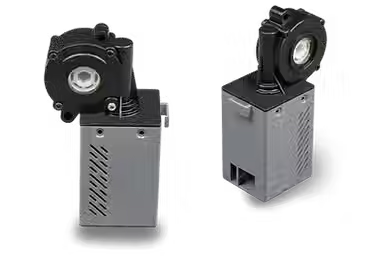
The adjustability and stability of hospital beds in healthcare environments have a direct impact on patient comfort and care efficiency, and the HDM Actuator for Hospital Bed has been designed for hospital use, with silent operation, high load capacity, and multi-stage precision adjustments to provide powerful and reliable power support for modern hospital beds, and to help build a more humanized and intelligent healthcare space. It helps to build a more humanized and intelligent medical space.
The versatility of electric motors continues to drive innovation in various industries, making them the backbone of modern industrial applications.
Explore more insightful articles like this one – we have plenty more for you to discover here!
Key Benefits of Electric Motor Applications in Manufacturing
Electric motor industrial applications have transformed the manufacturing landscape, enhancing efficiency and productivity across various sectors. These motors offer precise control over operations, resulting in improved quality and reduced waste. By integrating electric motors into their systems, manufacturers can streamline processes while minimizing energy consumption, leading to sustainable practices and increased profit margins.

Enhanced Efficiency
One of the key advantages of electric motors in industrial applications is their ability to operate with high efficiency. Unlike combustion engines, electric motors convert a higher percentage of electrical energy into mechanical energy. This efficiency minimizes energy losses, enabling manufacturers to lower operational costs while maintaining high output levels. As energy costs continue to rise, electric motors provide an attractive solution for industrial applications.
Reduced Maintenance Needs
Electric motor systems typically require less maintenance than their fossil fuel counterparts. With fewer moving parts and no need for oil changes or fuel management, manufacturers can save on maintenance costs and downtime. This reliability is crucial in industrial environments, where production speed is a top priority.
Lower energy consumption
Minimized operational costs
Decreased carbon footprint
Benefit | Electric Motors | Fossil Fuel Engines |
Efficiency | High | Moderate |
Maintenance | Low | High |
Environmental Impact | Low | High |
Longer Lifespan
The longevity of electric motors is another crucial factor in their popularity. With less wear and tear compared to traditional engines, electric motors yield a longer operational life. This durability means manufacturers can count on consistent performance over time, which is vital for maintaining production schedules.
Extended operational life
Consistent performance
Lower replacement frequency
Investing in electric motor industrial applications is not just about efficiency; it’s a step toward a more sustainable future in manufacturing.
Innovative Electric Motor Solutions for Energy Efficiency
In the realm of Electric Motor Industrial Applications, energy efficiency has become a cornerstone of innovation. Modern electric motors are designed to consume less energy while delivering optimal performance. This combination not only reduces operational costs for industries but also contributes to a sustainable environment. Various sectors are embracing these advancements to increase productivity and decrease their carbon footprint.
Advanced Technologies Driving Efficiency
Emerging technologies such as variable frequency drives (VFDs) and high-efficiency motors are redefining the landscape of electric motor industrial applications. These technologies enable precise control of motor speed and torque, aligning energy consumption with operational requirements. Moreover, this adaptability is critical in applications ranging from manufacturing to logistics, reflecting significant energy savings. Here is our homepage
Applications Across Industries
Electric motors are pivotal in various sectors including manufacturing, aerospace, and transportation. Within each of these fields, innovative motor design focuses on enhancing energy efficiency, reliability, and overall system performance. The integration of smart sensors and IoT technology further enhances these efficiencies, opening new avenues for improved management and monitoring. To meet the ultimate in efficiency and responsiveness in modern applications, many engineers and designers are turning to more specialized powertrains. If you're looking for a drive solution that combines speed and stability, the Speed-focused Motor is the ideal choice. It not only improves overall operating efficiency, but also demonstrates superior acceleration and precise control in mission-critical applications.
Manufacturing automation
Transportation systems
Aerospace engineering
Energy management
Application | Electric Motor Type | Efficiency Gains |
Manufacturing | High-efficiency motors | Up to 30% |
Transportation | Brushless DC motors | 20% - 25% |
Aerospace | Switched reluctance motors | 15% - 20% |
Future of Electric Motors
As industries continue to seek energy-efficient solutions, the future of electric motors looks promising. Research and development are focused on not only improving performance but also integrating artificial intelligence for optimized usage. Smart motor technologies will revolutionize how we think about and use electric motors in industrial applications.
Emerging motor technologies
Integration with IoT
Artificial intelligence in operations
Common Industries Leveraging Electric Motor Technologies
Electric motor industrial applications are revolutionizing various sectors by enhancing efficiency and sustainability. These technologies are fundamental to many industries, providing power for a range of equipment and machinery. As we delve deeper into the key sectors utilizing electric motors, you'll discover how integral these applications are to modern infrastructure and production processes.

Manufacturing Sector
The manufacturing industry heavily relies on electric motor industrial applications for multiple processes, including assembly lines and material handling. With advancements in motor technologies, manufacturers can achieve higher productivity while reducing energy consumption. This shift not only cuts costs but also minimizes environmental impact, aligning with today’s eco-conscious initiatives.
Automotive Industry
In the automotive sector, electric motors are critical for both traditional and electric vehicles. They power everything from power steering systems to electric drivetrains, making vehicles more efficient and reducing dependence on fossil fuels. The transition to electric vehicles showcases the growing importance of this technology in shaping a sustainable future.
Manufacturing
Automotive
Aerospace
HVAC Systems
Renewable Energy
Wind Turbines
Solar Panels
Geothermal Systems
"The ongoing evolution of electric motor technologies paves the way for efficiency and sustainability in industry."
Energy Sector
The energy sector is rapidly adopting electric motors in wind turbines and solar energy systems, facilitating cleaner energy production. This innovation supports global objectives for energy efficiency and sustainability, proving that electric motor industrial applications can lead to a greener planet.
Conclusion
As these industries continue to expand, the demand for electric motor industrial applications will only increase. They play a crucial role in maintaining operational efficiency and promoting sustainable practices across sectors.
Manufacturing | Automated systems, conveyors |
Automotive | Electric vehicles, power systems |
Aerospace | Flight controls, actuation |
Sustainable Practices with Electric Motors in Industrial Settings
Electric motor industrial applications are becoming essential as industries pursue sustainable practices. Electric motors play a crucial role in optimizing energy efficiency, reducing emissions, and minimizing waste. By integrating these technologies into operations, businesses can align their production processes with environmental standards while also reducing operational costs. With the increasing focus on sustainability, it’s crucial to explore the different applications of electric motors that contribute to eco-friendly practices.

Energy-efficient Technologies
Modern electric motors are designed to be more energy-efficient than traditional models. These advancements not only lower energy consumption but also lead to substantial cost savings over time. Industries that adopt energy-efficient electric motors may find substantial reductions in their carbon footprint, making them more competitive in an environmentally conscious market. To meet the ultimate in efficiency and responsiveness in modern applications, many engineers and designers are turning to more specialized powertrains. If you're looking for a drive solution that combines speed and stability, the Speed-focused Motor is the ideal choice. It not only improves overall operating efficiency, but also demonstrates superior acceleration and precise control in mission-critical applications.
Waste Reduction Strategies
Electric motors can also support waste reduction in industrial settings. By utilizing automation and precise control systems, these motors can optimize manufacturing processes, ensuring that material waste is minimized. This practice supports a circular economy and promotes resource sustainability by maximizing output from raw materials. In many applications where high load capacity is required, high speed is not enough. A drive solution with strong torque output is the key, and the Torque-focused Motor is designed to cope with high loads and high resistance environments, and maintains a stable and strong power output at low speeds, which is widely used in industrial automation, heavy machinery, and lifting and lowering systems in the smart home.
Implement energy-efficient motor designs.
Utilize variable frequency drives for precision control.
Conduct regular maintenance for optimal performance.
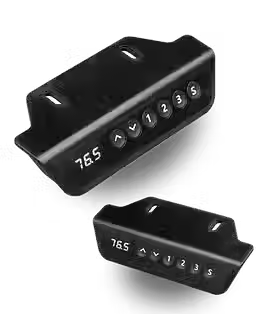
Adopting sustainable electric motor industrial applications involves careful planning and investment. However, the long-term benefits justify these efforts, often culminating in improved overall productivity and reduced operational costs. 4 Buttons DC Motor Controller provides efficient, intuitive operation for a compact, functionally focused motorized control system. Commonly used in power recliners, lift tables, or nursing equipment, the controller supports basic raise/lower or open/close operation, combined with DC motors for stable, responsive posture adjustment. Learn more about it here.
Application Type | Benefit | Impact on Sustainability |
Automation | Increased efficiency | Lower resource consumption |
Energy-efficient motors | Cost savings | Reduced emissions |
Smart control systems | Precise operation | Material waste reduction |
Long-term Benefits of Electric Motors
Integrating electric motors into industrial applications not only enhances operational efficiency but also significantly contributes to sustainability goals. As technology continues to evolve, the applications of electric motors will expand, further driving efficiency and eco-friendliness. With the growing demand for efficient, low-noise and long-life motors, the Brushless DC Motor has become the core power source in many modern devices. With less friction loss and higher energy efficiency, they are widely used in power tools, home appliances, medical equipment, and smart furniture, making them an ideal upgrade alternative to traditional brushed motors.
Track energy consumption.
Invest in motor upgrades.
Train staff on sustainable practices.
Future Trends in Electric Motor Industrial Applications
The landscape of electric motor industrial applications is evolving rapidly, driven by advancements in technology and sustainability concerns. As industries prioritize energy efficiency and emission reductions, electric motors are at the forefront, enabling more sustainable practices across various sectors. Innovations in motor design, control systems, and material science are unlocking new capabilities, leading to more efficient and reliable electric motor solutions.
Integration of IoT and Smart Technologies
The integration of Internet of Things (IoT) technologies and smart systems is revolutionizing electric motor industrial applications. These advancements allow for real-time monitoring, predictive maintenance, and overall operational efficiency. By collecting and analyzing data, businesses can optimize motor performance and reduce downtime, ensuring seamless operations that can withstand the demands of modern industrial environments.
Emphasis on Renewable Energy
As industries shift towards renewable energy sources, electric motors will play a critical role. The increasing deployment of wind turbines, solar panels, and electric vehicles necessitates robust motor solutions that align with green initiatives. This trend underscores the importance of electric motor design and efficiency, contributing to a more sustainable future.
Enhanced efficiency through advanced materials.
Smart sensors for real-time performance metrics.
Increased use of electric vehicles in transportation.
The future of electric motors in industrial applications is promising, with continuous growth expected across various sectors. Research and development efforts are focusing on innovative ways to integrate these technologies for maximum impact.
Trend | Description |
IoT Integration | Enhances operational efficiency through data analytics. |
Renewable Energy Focus | Electric motors support the shift towards green energy solutions. |
Future Potential
Considering the potential advancements in electric motor industrial applications, industries must stay ahead of the curve. Continuous investment in innovation and training will be essential for leveraging new technologies effectively.
Invest in R&D to explore new capabilities.
Implement training programs for workforce adaptation.
"The future of electric motors is not just about technology, it's about paving the way for a sustainable industrial future."
Frequently Asked Questions about Electric Motor Uses
Electric motors are indispensable across various industries, driving countless applications. Understanding their industrial applications can provide insights into their efficiency and versatility. These motors operate by converting electrical energy into mechanical energy, serving roles from powering machinery to driving complex systems. The scope of electric motor industrial applications is vast and continues to expand with advancements in technology.
What Industries Utilize Electric Motors?
Electric motors find their place in numerous sectors, showcasing their adaptability. Industries such as manufacturing, mining, and transportation significantly rely on these efficient devices. Their ability to produce high torque and withstand continuous operation makes them perfect for heavy-duty tasks. Additionally, the rise of electric vehicles has further stimulated demand for innovative electric motor solutions, enhancing the approach to sustainable transport.
To meet the ultimate in efficiency and responsiveness in modern applications, many engineers and designers are turning to more specialized powertrains. If you're looking for a drive solution that combines speed and stability, the Speed-focused Motor is the ideal choice. It not only improves overall operating efficiency, but also demonstrates superior acceleration and precise control in mission-critical applications.
What are the Types of Electric Motors Used in Industry?
Different types of electric motors are employed based on specific industrial needs. The most common types include AC motors, DC motors, and stepper motors. Each type serves unique functions, making them suitable for various applications, such as conveyor systems, robotics, and HVAC systems. Understanding these differences is crucial for optimizing performance in electric motor industrial applications.
In many applications where high load capacity is required, high speed is not enough. A drive solution with strong torque output is the key, and the Torque -focused Motor is designed to cope with high loads and high resistance environments, and maintains a stable and strong power output at low speeds, which is widely used in industrial automation, heavy machinery, and lifting and lowering systems in the smart home.
AC Motors
DC Motors
Stepper Motors
Servo Motors
Choosing the right motor type is essential for efficiency and longevity.
Motor Type | Application | Efficiency |
AC Motors | Fans, pumps | High |
DC Motors | Robotics, electric vehicles | Medium |
Stepper Motors | 3D printers, CNC machines | Variable |
How to Maintain Electric Motors?
Proper maintenance ensures that electric motors operate efficiently over time. Regular inspections and timely repairs can save significant costs related to downtime and replacements. Emphasizing lubrication, cooling, and cleanliness during maintenance routines can prolong motor life, enhancing their performance in electric motor industrial applications.
With the growing demand for efficient, low-noise and long-life motors, the Brushless DC Motor has become the core power source in many modern devices. With less friction loss and higher energy efficiency, they are widely used in power tools, home appliances, medical equipment, and smart furniture, making them an ideal upgrade alternative to traditional brushed motors.
Regular inspections
Lubrication
Monitoring for vibrations
The efficiency of electric motors has significant implications for energy consumption and operational costs in industry.


Comments