The Complete Guide to DC Motors: Innovation, Applications, and Variable Speed Control
Updated: May 12, 2025

In today’s rapidly advancing technological landscape, DC motors are becoming an increasingly indispensable component in both consumer and industrial sectors. From powering ergonomic height-adjustable desks to driving robotics and automation systems, their unparalleled flexibility, precision, and energy efficiency make them the motor of choice for a wide range of modern engineering applications.
As a leading global manufacturer of high-quality DC motors for desks, MEI MOVE stands at the forefront of innovation, delivering performance-driven solutions that seamlessly blend mechanical excellence with user-friendly controls. This comprehensive guide delves into the fascinating history of DC motors, their diverse applications across industries, and how variable speed electric motors with controllers are revolutionizing the design of modern workspaces—enabling smarter, more efficient, and highly adaptable office environments.
DC Motor Innovation and Application Guide:
When Was the DC Motor Invented?
The DC motor (direct current motor) is one of the earliest forms of electrical motors, with its roots tracing back to the 19th century. But exactly when was the DC motor invented?
The journey began in 1832, when William Sturgeon, an English physicist, developed the first practical DC motor. However, it wasn’t until 1834, when Thomas Davenport, an American inventor, constructed a working model that successfully powered a small railway, that the motor began to show its potential for practical applications.
Subsequent advancements by key innovators such as Zénobe Gramme and Frank Julian Sprague further refined the DC motor, making it more efficient and viable for commercial use. These improvements paved the way for widespread adoption, initially in manufacturing and transportation industries, and eventually expanding into office equipment and consumer electronics.
Fun Fact: Thomas Edison also used DC motors in his early power distribution systems before AC became the dominant form.
Where Are DC Motors Used Today?
The applications of DC motors have expanded significantly since their invention. So, where are DC motors used in today’s world?
Below is a breakdown of the diverse industries and everyday products where DC motors play an essential role:
1. Ergonomic Desks and Office Furniture
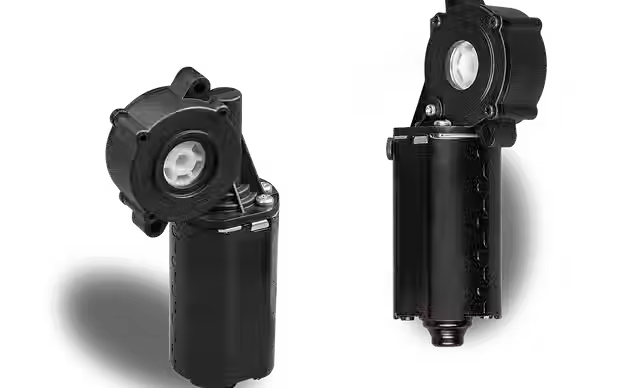
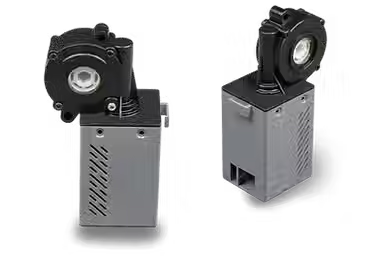
In the era of remote work and growing ergonomic awareness, height-adjustable desks powered by DC motors provide smooth and silent motion, ensuring seamless transitions. These motors enable precise adjustments, allowing users to effortlessly switch between sitting and standing positions, promoting better posture and enhancing productivity. MEI MOVE's DC motors are specifically engineered for this purpose—offering quiet, powerful, and highly reliable performance to elevate the user experience.
2. Electric Vehicles and Scooters
DC motors are the driving force behind everything from electric bicycles to high-performance electric vehicles. Their capability to deliver instant torque makes them the perfect choice for electric mobility solutions, providing efficient and powerful performance in a variety of transportation applications.
3. Consumer Electronics
Fans, hair dryers, toys, and household gadgets rely on small DC motors for efficient, controllable motion. Brushless DC motors, in particular, are valued for their durability and low maintenance.
4. Industrial Automation
Factory robots, conveyor belts, CNC machines, and automated doors all rely on DC motors for their operations. These motors provide precise control and are seamlessly integrated with programmable logic controllers (PLCs), ensuring smooth and efficient automation in various industrial processes.
5. Medical Equipment
DC motors are extensively utilized in hospital beds, infusion pumps, and surgical devices because of their quiet operation, precise controllability, and ability to ensure smooth and reliable performance in critical medical environments.
6. Renewable Energy Systems
Wind turbines and solar tracking systems rely on DC motors to precisely adjust their orientation, optimizing energy capture and enhancing the efficiency of renewable energy production.
How DC Motors Work
Understanding the workings of DC motors sheds light on why they are so universally employed. At their core, DC motors convert electrical energy into mechanical motion, offering a seamless and efficient means of powering a variety of applications.
Basic Working Principle
A DC motor operates based on the fundamental principle that when an electric current flows through a conductor within a magnetic field, it experiences a force. This force, in turn, causes the conductor to rotate, effectively converting electrical energy into mechanical torque.
The main components of a traditional DC motor include:
Stator – Generates the stationary magnetic field that interacts with the rotor.
Rotor (Armature) – The rotating coil where electrical current flows, generating motion.
Commutator – Reverses the direction of current flow every half-turn to maintain continuous rotation.
Brushes – Maintain electrical contact with the commutator, ensuring the motor operates smoothly.
In modern brushless DC motors (BLDC), the traditional brushes and commutator are replaced by electronic controllers, significantly improving the motor's efficiency, durability, and lifetime.

What Is a Variable Speed Electric Motor With Controller?
A variable speed electric motor with a controller enables users to adjust both the speed and torque of the motor dynamically. This flexibility makes it an exceptionally versatile and efficient solution for a wide range of applications. By fine-tuning the motor’s performance in real-time, the system can optimize energy use, enhance control, and improve the overall user experience. Whether for precise machinery operation or smooth height-adjustment in desks, these motors offer significant advantages in terms of energy efficiency and customizability.
Why Variable Speed Matters
Traditional motors typically operate at a fixed speed, which can limit their versatility and adaptability to different needs. In contrast, a variable speed motor offers the advantage of dynamically adjusting its speed based on workload or specific usage contexts. This flexibility is particularly crucial in applications such as standing desks, where smooth, precise transitions are required. By allowing for variable speed control, these motors ensure a seamless, comfortable user experience, reducing jerky movements and enhancing overall performance. Whether transitioning between sitting and standing positions or adapting to varying loads, variable speed motors provide the level of control necessary for modern ergonomic furniture solutions.
How It Works
A motor controller is an essential component integrated with the DC motor to regulate the input voltage or use pulse width modulation (PWM). This integration enables several key functionalities that optimize performance, including:
Precise Control of Motor Speed: Allows for accurate adjustments to the motor's speed, ensuring smooth and consistent operation.
Smooth Start/Stop Functionality: Gradual acceleration and deceleration prevent abrupt movements, ensuring the system operates quietly and safely.
Enhanced Energy Efficiency: By adjusting motor speed according to the required load, the controller minimizes power consumption, contributing to energy savings.
Overload Protection: Safeguards the motor against potential damage by detecting excessive load and automatically reducing power or stopping the motor when necessary.
Directional Control: Enables easy and precise movement, such as raising or lowering a height-adjustable desk, ensuring a smooth and controlled motion during operation.
Together, these features allow DC motors with motor controllers to deliver reliable, efficient, and user-friendly performance in a wide range of applications, particularly in ergonomic furniture like adjustable desks.
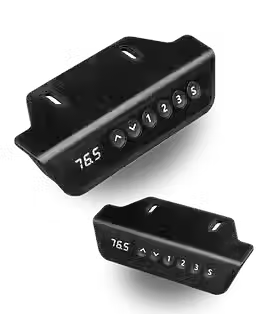
MEI MOVE’s motor solutions include built-in controllers tailored for ergonomic applications, ensuring seamless performance and energy savings.
Benefits of DC Motors for Desks and Adjustable Furniture
The demand for ergonomic furniture is booming, driven by the increasing focus on workplace health and productivity. MEI MOVE's DC motor systems provide a range of key advantages that make them the perfect solution for height-adjustable desks and other ergonomic applications:
1. Smooth and Silent Operation
No one wants a noisy desk disturbing their workflow. MEI MOVE’s DC motors deliver whisper-quiet adjustments, ensuring that desk movements are smooth and undetectable. This feature is especially crucial in office environments, where quiet operation is necessary to maintain focus and productivity.
2. Precision Control
DC motors offer precise control over desk height adjustments and memory positions. Whether you're fine-tuning the height for ergonomic comfort or activating pre-set memory positions, these motors respond quickly and accurately, allowing users to make adjustments with minimal effort and maximum reliability.
3. Energy Efficiency
DC motors are known for their energy efficiency. By consuming less power while delivering consistent performance, they help reduce operating costs and the environmental footprint. This energy-efficient design not only benefits businesses but also supports the growing trend of sustainable product design.
4. Compact and Lightweight Design
Despite their powerful performance, DC motors are compact and lightweight, making them perfect for modern furniture designs. Their small size allows them to be seamlessly integrated into sleek desk frames, providing users with an unobtrusive yet highly functional ergonomic solution.
5. Safe and Reliable
Safety is a priority with MEI MOVE’s DC motors. Each motor is equipped with advanced safety features, such as anti-collision technology to prevent damage to furniture or injury to users, thermal protection to prevent overheating, and overload safeguards that protect the motor from excessive strain. These features ensure reliable performance and peace of mind for users and manufacturers alike.
MEI MOVE’s DC motors offer the perfect balance of functionality, performance, and design, making them the ideal choice for ergonomic furniture and height-adjustable desks in today’s modern workspaces.
Choosing the Right DC Motor for Your Desk Application
Not all motors are created equal. Here’s what to consider when selecting a DC motor for adjustable desks:
1. Load Capacity
Ensure the motor can handle the weight of monitors, hardware, and other equipment on the desk.
2. Stroke Length and Speed
Different desks require varying ranges of motion. Choose a motor that matches your adjustment needs.
3. Voltage and Power Supply
Most motors for desks use low-voltage DC (e.g., 24V), which is safe and efficient.
4. Controller Compatibility
Pair the motor with a variable speed controller for user-friendly and precise control.
5. Certifications and Standards
Always check for CE, UL, or RoHS certifications for safety and compliance.
Why MEI MOVE is the Preferred Partner for DC Motors
MEI MOVE isn’t just a motor manufacturer—they’re a solutions provider for businesses that want reliable, scalable, and advanced motion systems.
What Sets MEI MOVE Apart
Customization Options: Tailored motor systems to suit your desk design
In-House R&D: Continuous innovation and quality improvement
Global Standards: All products comply with ISO, CE, and other regulatory standards
Customer Support: Expert engineers and after-sales teams for every stage
Whether you’re an OEM furniture brand or a startup entering the workspace innovation market, MEI MOVE’s DC motors provide the power and precision your products need.
Conclusion
As the global shift toward smart, ergonomic, and energy-efficient furniture continues to gain momentum, DC motors—particularly those equipped with variable speed electric controllers—remain at the heart of this transformation. From their early invention to their modern-day applications, DC motors symbolize innovation, reliability, and adaptability, making them the cornerstone of the future of workspace design.
At the forefront of this evolution, MEI MOVE is leading the charge by developing high-performance DC motors specifically engineered for the office of tomorrow. Whether you're an office furniture manufacturer, a designer, or an ergonomic solutions provider, MEI MOVE offers the expertise, technology, and customized solutions to power your next product and meet the growing demand for smart, adjustable, and energy-efficient workspaces.
Our DC motor systems are designed to provide not only smooth and precise motion but also sustainability and comfort for users. We continue to innovate and refine our motor solutions, ensuring that they align with the evolving needs of the modern office environment. By choosing MEI MOVE, you're not only selecting cutting-edge technology but also partnering with a company that is committed to shaping the future of ergonomic furniture.
Ready to integrate MEI MOVE’s DC motor technology into your next project? Contact us today to discuss your custom requirements.
FAQs
1. When was the DC motor invented?
DC motors were first practically developed in the 1830s, with contributions by William Sturgeon (1832) and Thomas Davenport (1834). Their evolution led to industrial adoption by the late 1800s.
2. Where is a DC motor used?
DC motors are used in height-adjustable desks, electric vehicles, robotics, fans, conveyor systems, medical devices, and more—virtually anywhere precise, efficient motion is needed.
3. What is a variable speed electric motor with controller?
This refers to a motor system where the user can adjust the motor's speed and direction using a built-in or external controller. It's essential for applications like adjustable desks and automation.
4. Are brushless DC motors better?
Yes. Brushless DC motors (BLDCs) are quieter, more durable, and more efficient than brushed motors, though slightly more complex in terms of controller design.
5. Can MEI MOVE motors be customized for my desk system?
Absolutely. MEI MOVE offers customized motor solutions based on load, speed, voltage, stroke, and controller preferences for OEMs and commercial clients.


Comments