Linear Actuators in Furniture: UL Standard Requirements
What Are Linear Actuators in Furniture? (Definition and Core Function)
Key UL Standards for Furniture Linear Actuators: UL 962A and UL 60730-1 Explained
How to Identify UL-Certified Linear Actuators for Your Furniture Project
Electrical Safety Requirements Under UL Standards: A Detailed Breakdown
Mechanical and Endurance Testing for UL-Compliant Furniture Actuators
What is the UL Certification Process for Furniture Actuator Manufacturers?
Beyond UL: Other Important Standards for Smart Furniture Actuators
The Future of Safety: Evolving Standards for Connected Furniture Actuators
What Are Linear Actuators in Furniture? (Definition and Core Function)
A linear actuator is the core electromechanical component that converts electrical energy into controlled, straight-line motion. In modern furniture, these devices replace manual levers and cranks, enabling automated height adjustment, tilting, and reclining with the push of a button. For engineers and designers, selecting the right actuator involves balancing force, speed, and stroke length against safety standards like UL 962 for furniture.

1. Core Definition and Mechanism
1.1 The Basic Electromechanical Principle
At its simplest, an electric linear actuator uses a small DC motor to drive a screw or gear mechanism, extending or retracting a rod. This creates precise linear motion, typically with a force range from 150 to 2,000 Newtons (N). The motion is controlled by a switch or remote, allowing for incremental or full-range positioning.
In practice, this mechanism translates rotational force from the motor into the push/pull action needed to lift a desk top or adjust a chair back. The system's efficiency is determined by the gearbox design and screw lead, which directly impact speed and load capacity.
1.2 Key Components and Their Roles
Understanding the internal components is crucial for specification and troubleshooting. The primary elements work in a defined sequence to produce motion.
DC Motor: Provides the rotational power, commonly operating at 12V or 24V DC for safety in furniture applications.
Gearbox: Reduces motor speed and increases output torque, essential for handling heavy loads like a fully laden desk.
Lead Screw or Spindle: Converts the gearbox's rotation into linear travel; the thread pitch defines the extension speed and force.
Limit Switches: Integrated sensors that automatically cut power at the fully extended and retracted positions to prevent motor burnout and mechanical damage.
Pro Tip: MEIMOVE engineers recommend verifying the actuator's duty cycle—often 10% (2 minutes on, 18 minutes off)—to ensure it matches the intended use frequency of the furniture piece, preventing premature failure.
2. Function and Application in Furniture
2.1 Enabling Modern Ergonomic Design
The primary function of a linear actuator in furniture is to facilitate dynamic movement, which is a cornerstone of ergonomic design. By allowing users to easily change their working or resting posture throughout the day, these systems help reduce musculoskeletal strain.
For example, in a sit-stand desk, actuators provide the force to smoothly transition the work surface between a seated height of around 28 inches and a standing height of approximately 48 inches, accommodating a wide range of users.
2.2 Common Furniture Applications
Linear actuators are now integral to a wide array of automated furniture, moving beyond office environments into residential and healthcare settings. Their reliability and quiet operation make them ideal for daily use.
You will typically find them integrated into the following furniture types:
Height-Adjustable Desks: Using 2 or 3 actuators for stable, synchronous lifting of the desktop.
Ergonomic Office Chairs: Controlling seat height, tilt tension, and lumbar support adjustment.
Patient Care Furniture: Automating the movement of hospital beds, patient lifts, and treatment tables.
Home Recliners & Lift Chairs: Providing smooth recline and lift-assist functions for comfort and accessibility.
This foundational understanding of what a linear actuator is and how it functions sets the stage for deeper technical evaluation, including critical factors like load rating, speed, and integration with control systems.
Why UL Standards are Critical for Furniture Actuator Safety
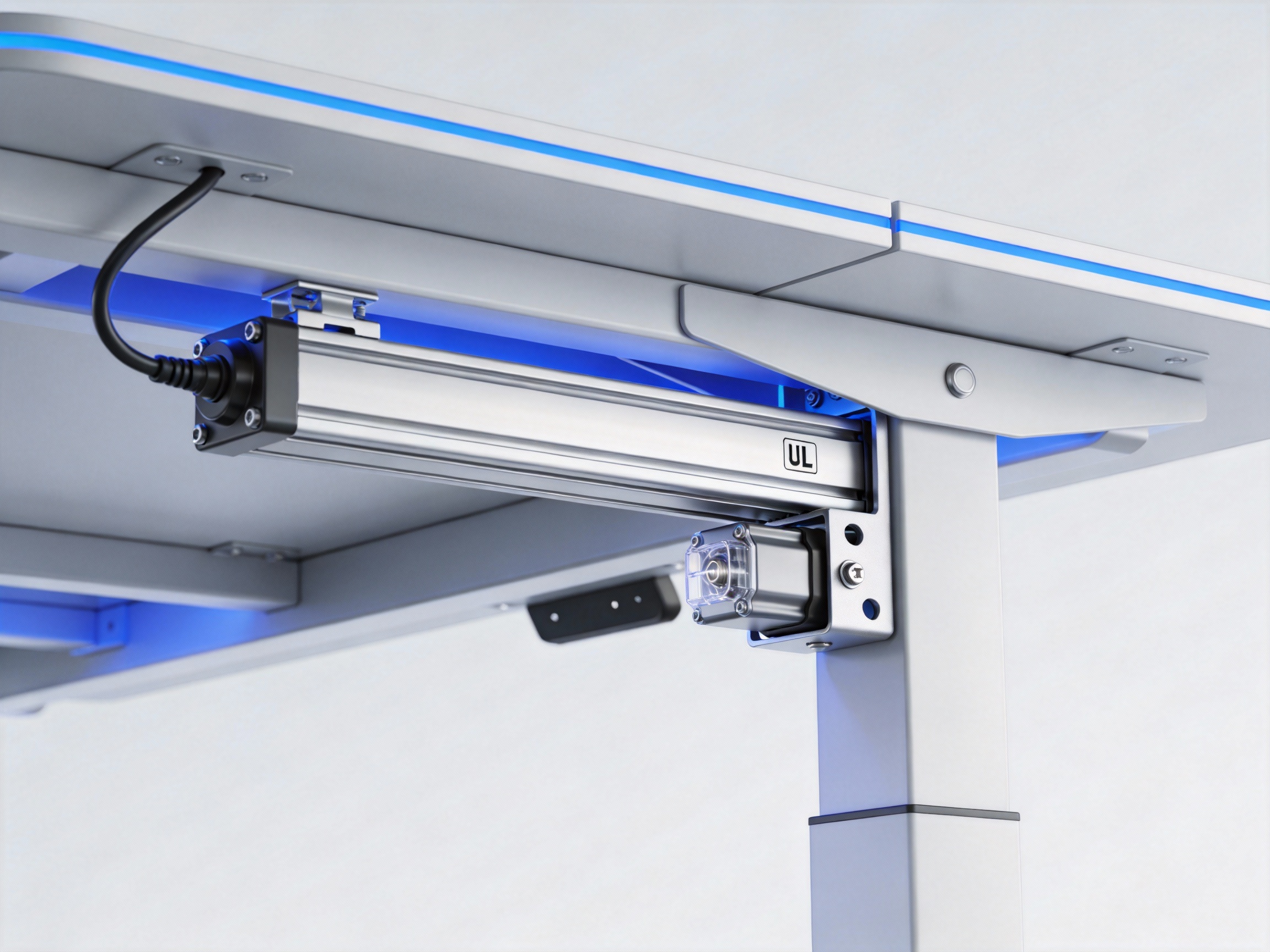
Integrating linear actuators in furniture introduces electrical and mechanical components into everyday living spaces, making independent safety certification non-negotiable. The UL mark is not just a logo; it's a verified promise that an actuator has passed rigorous tests for fire, shock, and mechanical hazards. For specifiers and manufacturers, selecting UL-certified components is the most effective risk mitigation strategy, a practice MEIMOVE engineers prioritize in all design consultations.
1. The Hidden Risks of Non-Compliant Actuators
1.1 Fire and Electrical Shock Hazards
Uncertified actuators often use substandard insulation, undersized wiring, or faulty thermal cut-offs, creating significant fire ignition risks. According to the U.S. Consumer Product Safety Commission (CPSC), electrical failures are a leading cause of residential fires, accounting for an estimated 13% of all U.S. home structure fires annually.
In practice, an overloaded motor or poor internal connection can overheat, melting nearby plastics and ignishing upholstery. UL 60730-1 testing specifically evaluates these failure modes under abnormal operating conditions.
1.2 Mechanical and Entrapment Dangers
Beyond electrical issues, mechanical failure poses direct physical threats. A non-compliant actuator may lack proper load-holding brakes or have weak gear trains that fail under stress, causing a desk or bed to collapse unexpectedly.
Entrapment is a critical concern, especially in adjustable beds or recliners. UL standards require force-sensing mechanisms that automatically reverse motion if an obstruction is detected, typically limiting pinch force to under 150 Newtons to prevent injury.
Pro Tip: MEIMOVE's validation process always includes a tear-down of competitor samples. We frequently find non-UL actuators using plastic gears rated for 10kg where metal is required, a direct compromise on long-term safety and durability.
2. The UL Certification Process as a Safety Guarantee
2.1 Rigorous Testing Protocols
UL certification involves a multi-stage evaluation far beyond basic functionality. Products are tested to their destruction point to identify failure modes. Key tests include dielectric strength verification at 1,250 volts, endurance cycling under 150% load, and fault condition simulations.
This process validates that safety is engineered in, not just added on. A UL-listed actuator has proven its design can contain electrical faults and maintain mechanical integrity throughout its lifecycle.
2.2 Ongoing Surveillance and Compliance
The UL mark requires ongoing factory surveillance (Follow-Up Services), where inspectors audit production lines and randomly test units from the shelf. This ensures continuous compliance, unlike a one-time self-declaration.
Annual unannounced factory inspections
Random product sampling for retesting
Review of component source changes
Verification of production test equipment calibration
3. Making Informed Specification Decisions
3.1 Interpreting the UL Mark Correctly
Look for the specific UL listing mark, not just a generic reference to "UL standards." For furniture actuators, the relevant standard is typically UL 60730-1 (Automatic Electrical Controls). The UL mark should include a control number unique to the certified product model.
As stated by UL Solutions, "The presence of the UL Mark means that UL has tested and evaluated representative samples of the product and determined that they meet UL’s requirements." This third-party validation is the core of its value.
3.2 Cost of Non-Compliance vs. Investment in Safety
While uncertified actuators may have a lower upfront cost, the long-term liability is substantial. A single incident involving fire or injury can lead to lawsuits, product recalls, and irreparable brand damage that far outweigh initial savings.
Specifying UL-certified actuators mitigates this business risk and simplifies compliance with broader codes like the National Electrical Code (NFPA 70) and retailer requirements, providing a clear path to market acceptance.
Key UL Standards for Furniture Linear Actuators: UL 962A and UL 60730-1 Explained
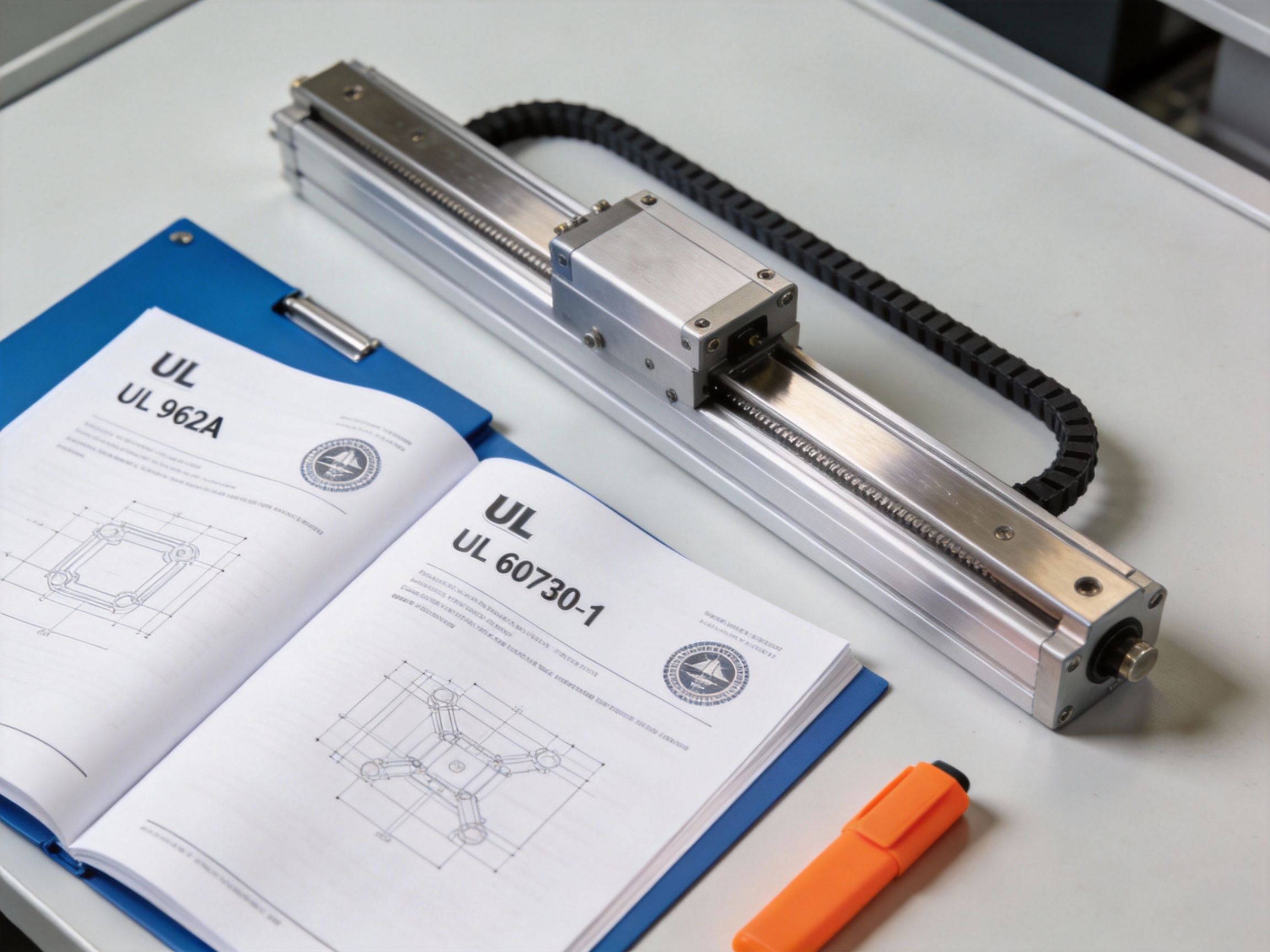
For furniture linear actuators targeting the US market, compliance with Underwriters Laboratories (UL) standards is non-negotiable for safety and market access. The two primary standards are UL 962A for furniture and UL 60730-1 for automatic electrical controls. MEIMOVE engineers prioritize these certifications to ensure products meet rigorous electrical, mechanical, and fire safety benchmarks.
1. UL 962A: The Furniture-Specific Standard
1.1 Scope and Application
UL 962A, titled "Standard for Household and Commercial Furnishings," directly governs furniture containing electrical equipment. This includes motorized desks, beds, and recliners where linear actuators are integral. The standard's primary focus is on fire, electrical shock, and mechanical hazards specific to furniture assemblies.
It evaluates the complete furniture product, not just the actuator in isolation. This means testing the entire system's safety under normal and fault conditions.
1.2 Key Safety Evaluations
Under UL 962A, actuators and their enclosures undergo stringent evaluations. These include endurance testing for thousands of cycles, stability tests to prevent tipping, and assessments of accessible surface temperatures to prevent burns.
Critical electrical safety tests involve dielectric withstand (hi-pot) testing at 1,000 volts and checks for proper grounding. The standard also mandates specific spacing (creepage and clearance) between live parts to prevent arcing.
Pro Tip: MEIMOVE's compliance team advises that for UL 962A listing, the actuator's control box must be evaluated as part of the furniture assembly. Using a pre-certified component does not automatically grant the final product a UL mark.
2. UL 60730-1: The Control Device Standard
2.1 Focus on Automatic Controls
UL 60730-1, "Standard for Automatic Electrical Controls," applies to the actuator's built-in control system, such as limit switches, overload protection, and control boards. It is harmonized with the international IEC 60730-1 standard, facilitating global market entry.
This standard classifies controls by their functional safety. Furniture actuators typically use Class A controls, which are not relied upon for protection against electric shock but are critical for safe operation.
2.2 Testing for Reliability and Failure
The core of UL 60730-1 is testing the control system's response to abnormal conditions. This includes verifying that protection mechanisms (e.g., thermal cut-offs) operate correctly during motor stall or overload scenarios.
Testing involves subjecting the control to extreme environmental conditions like humidity cycling and temperature extremes to ensure long-term reliability and prevent unsafe failure modes.
3. Direct Comparison and Compliance Strategy
3.1 Primary Differences in Focus
While both standards ensure safety, their scopes differ fundamentally. UL 962A evaluates the finished furniture product as a consumer item, focusing on end-user interaction risks like fire and physical injury.
UL 60730-1 evaluates the actuator's internal control system as an independent component, focusing on its electrical and functional safety under all operating and fault conditions.
3.2 Navigating Dual Certification
For a furniture linear actuator to be legally sold in the US, it often requires certification to both standards. The actuator as a component may carry UL 60730-1 recognition, while the final furniture product must obtain the UL 962A listing.
A practical compliance strategy involves selecting actuators that are already UL 60730-1 recognized, which significantly simplifies the final furniture product's UL 962A certification process.
Dimension | UL 962A | UL 60730-1 |
Primary Scope | Finished furniture product (e.g., desk, bed) | Automatic electrical control within the device |
Key Hazards Addressed | Fire, electrical shock, mechanical injury, stability | Unsafe control system operation, electrical faults |
Typical End-User | Furniture manufacturer (OEM) | Actuator or component manufacturer |
Certification Outcome | UL Listing Mark for the furniture item | UL Recognition Component mark for the control system |
Understanding the distinct roles of UL 962A and UL 60730-1 is the first step toward compliant product development. Next, we'll examine the specific testing procedures that validate an actuator's performance under these standards.
How to Identify UL-Certified Linear Actuators for Your Furniture Project
Verifying authentic UL certification is a critical step in selecting linear actuators for furniture, ensuring electrical safety and compliance with U.S. codes. This guide provides a step-by-step process for designers and manufacturers to validate certification marks and documentation. MEIMOVE engineers emphasize that this due diligence is non-negotiable for commercial projects to mitigate liability and ensure long-term reliability.
1. Locate and Verify the Physical UL Mark
1.1 Identify the Correct Marking
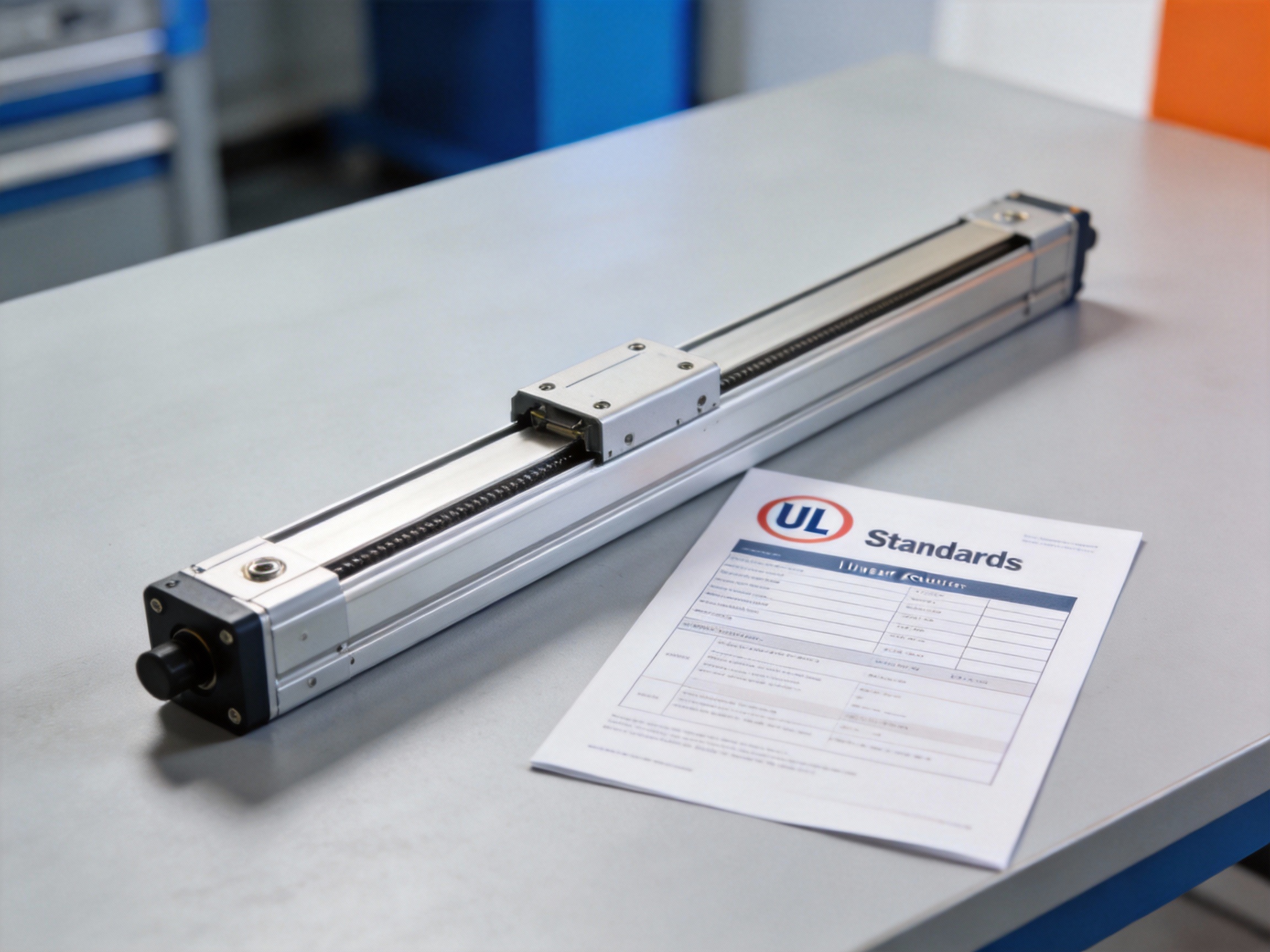
Authentic UL-certified actuators will bear a “UL Listed” or “UL Recognized Component” mark on the product label or housing. The “Listed” mark (often in a circle) indicates the complete product is certified, while “Recognized” means key components within an enclosed system are certified. Counterfeit marks often have blurry printing, incorrect logos, or missing control numbers.
Field experience shows that marks printed on adhesive labels instead of molded or stamped directly onto the metal housing are more susceptible to tampering or degradation.
1.2 Cross-Check the Four-Part Code
Every genuine UL mark includes a unique four-part alphanumeric control number (e.g., E123456). This code is the key to verification. The first letter identifies the UL category, such as ‘E’ for electrical equipment. You must cross-reference this number in the official UL Product iQ™ online database to confirm the product’s certification status, approved ratings, and the manufacturer’s name.
Pro Tip: MEIMOVE’s technical team advises checking the database for the specific actuator model’s “Guide Information” (the UL Category Code, like XCVU2). This document details the exact conditions—load, duty cycle, temperature—under which the certification is valid, which is crucial for furniture application engineering.
2. Validate Supporting Documentation
2.1 Request the UL Certificate of Compliance
Reputable manufacturers or distributors should provide a UL Certificate of Compliance or a page from the UL Follow-Up Services Procedure upon request. This document proves the product is under UL’s ongoing surveillance program, which includes unannounced factory inspections to ensure continued compliance. According to UL’s Follow-Up Services (FUS) protocol, this is a mandatory requirement for maintaining a valid listing.
2.2 Scrutinize Product Specifications
Compare the technical specifications on the product datasheet against the limits published in the UL online database. Key parameters must match, including:<ul><li>Maximum load capacity (static and dynamic)</li><li>Input voltage and current draw</li><li>Duty cycle rating (e.g., 10% or 25%)</li><li>Ingress Protection (IP) rating for dust/water resistance</li></ul>A mismatch, such as a datasheet claiming a 330 lb load for a unit only UL-listed for 250 lbs, is a major red flag.
3. Final Verification Checklist
3.1 Pre-Purchase Audit Steps
Before finalizing a purchase order, conduct this three-point audit. First, physically inspect a sample for a clear, permanent UL mark with a control number. Second, use the control number to verify the listing in the UL Product iQ™ database, ensuring the manufacturer’s name matches your supplier. Third, request and file the UL Certificate of Compliance for your project records.
This process typically takes 15-20 minutes per supplier but prevents costly compliance failures, which can lead to project delays, failed inspections, or safety recalls.
3.2 Ongoing Quality Assurance
For long-term projects or repeat orders, implement spot-checks on delivered batches. UL certification requires that every unit leaving the manufacturing line is identical to the tested sample. Check that the marking and model number on random units from new shipments correspond exactly to your originally validated documentation. This practice ensures consistency and protects against unauthorized product substitutions.
By systematically applying these steps, you secure a critical component that meets the safety standards expected in the U.S. furniture market. Next, we will examine how these certified actuators integrate into different smart furniture systems.
Electrical Safety Requirements Under UL Standards: A Detailed Breakdown
Integrating linear actuators into furniture requires strict adherence to electrical safety standards to prevent fire, shock, and operational hazards. The UL 60730-1 standard for automatic electrical controls is the primary benchmark in the US, mandating specific protections for the motor, wiring, and user interface. MEIMOVE engineers prioritize these requirements during design to ensure reliable and compliant smart furniture systems.
1. Insulation and Wiring Specifications
1.1 Conductor and Insulation Class Requirements
Actuator internal wiring must use conductors rated for at least 105°C to withstand heat from the motor and ambient conditions. Per UL 60730-1, insulation must meet Class B (130°C) or higher, providing a safety margin against thermal degradation.
In practice, using wiring with a minimum 300V rating is standard to handle potential voltage spikes and ensure long-term dielectric strength within the low-voltage DC system.
1.2 Strain Relief and Physical Protection
All cable entry points into the actuator housing require certified strain relief to prevent conductor pull-out or shearing from repeated furniture movement. Field experience shows that a failure here can lead to short circuits.
Internal wiring must be routed away from moving parts like the gearbox and secured with clamps or ties. A common checklist for safe wiring includes:
Verify a minimum 5mm clearance from all sharp edges or pinch points
Use abrasion-resistant sleeving where cables pass through metal openings
Secure wire bundles every 150mm to prevent fatigue and vibration damage
2. Circuit Protection and Grounding
2.1 Overcurrent and Overload Protection
The motor drive circuit must incorporate dual protection: a fuse or polyswitch for overcurrent and electronic sensing in the control board for motor stall/overload. According to UL, the overcurrent device must open the circuit before wiring insulation is compromised.
For a typical 12VDC furniture actuator drawing 5A, a 7.5A fast-blow fuse is commonly specified, providing protection without nuisance tripping during normal start-up current surges.
2.2 Grounding and Leakage Current
If the actuator housing is metal, it must be bonded to the equipment grounding conductor. This ensures any fault current has a low-impedance path to trip the branch circuit protector. Resistance from the housing to the ground pin must measure less than 0.1 ohms.
Furthermore, UL limits touch leakage current to below 0.5mA for user-accessible parts. This is achieved through proper insulation and spacing (creepage and clearance) on the PCB, typically requiring a minimum of 3.2mm between primary and secondary circuits.
Pro Tip: MEIMOVE's validation process includes a "wiggle test" on all wire terminations while the actuator is running under load. This simulates years of furniture movement and helps identify weak points in strain relief before production.
3. Key UL Certification Tests for Actuators
3.1 Dielectric Withstand (Hi-Pot) Test
This critical test verifies insulation integrity by applying a high voltage between live parts and the accessible metal housing. For furniture actuators operating from a SELV (Safety Extra-Low Voltage) source, the test voltage is typically 500V AC for 60 seconds with no breakdown allowed.
Passing this test confirms that the insulation system can safely withstand transient voltage surges that may occur in residential environments.
3.2 Abnormal Operation and Endurance
UL mandates testing under fault conditions, such as locking the actuator output shaft (simulating an obstruction) while powered. The protection system must cut power before the motor winding temperature exceeds its insulation class rating.
Additionally, actuators undergo an endurance test of 10,000 cycles minimum under load to validate mechanical and electrical longevity, ensuring the system remains safe throughout the furniture's lifespan.
Understanding these detailed UL requirements is foundational. Next, we'll examine how these electrical safety principles translate into physical installation best practices and connector selection for a robust final product.
Mechanical and Endurance Testing for UL-Compliant Furniture Actuators
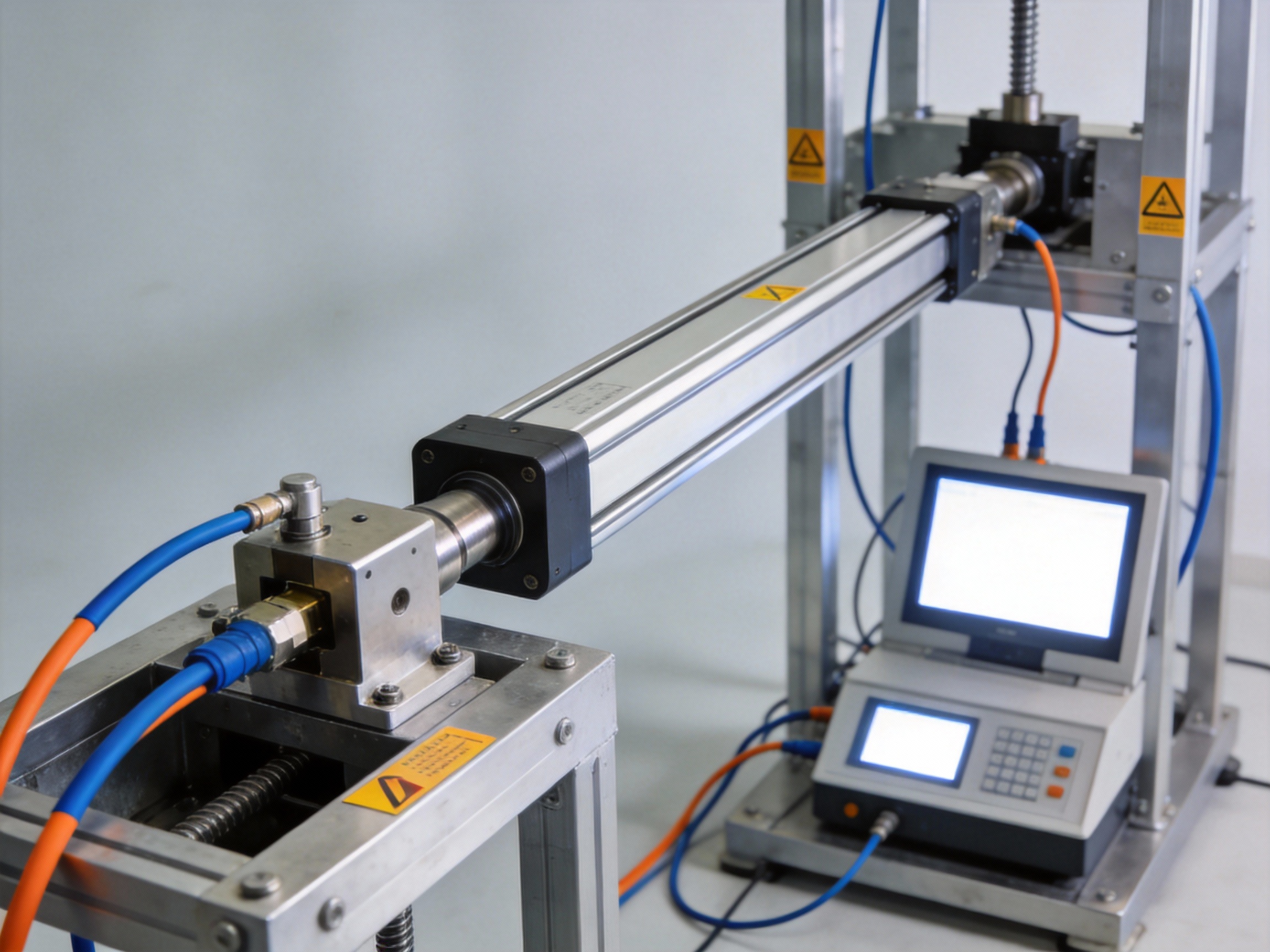
Rigorous mechanical testing is the cornerstone of UL certification for linear actuators in furniture, ensuring they perform reliably for years. These protocols simulate real-world use to validate load capacity, cycle life, and structural integrity. For engineers and specifiers, understanding these tests is critical for selecting components that meet both safety standards and user expectations for durability.
1. Load Capacity and Static Force Testing
1.1 Defining Rated Load and Safety Factor
The rated load, or maximum force capacity, is determined by applying a static force to the actuator until mechanical failure. Per UL 962, the actuator must withstand 150% of its rated load for a minimum duration without permanent deformation or damage.
This safety margin accounts for dynamic forces, uneven loading in furniture applications, and long-term material fatigue. Field experience shows that actuators meeting this threshold typically achieve a service life exceeding the minimum cycle requirements.
1.2 Testing Procedure and Failure Modes
Static load testing involves mounting the actuator in a test rig and applying a controlled, increasing force. The test monitors for specific failure points like gear teeth shearing, lead screw bending, or motor mount cracking.
A common oversight is testing only in the ideal vertical position. MEIMOVE engineers recommend testing at multiple angles to simulate real furniture installations, such as in recliners or adjustable desks where force vectors are not purely axial.
2. Duty Cycle and Endurance Life Validation
2.1 Standard Cycle Life Requirements
Endurance testing subjects the actuator to repeated extension and retraction cycles under load. While UL standards set minimums, premium actuators for furniture are often tested to higher commercial benchmarks. The table below outlines typical requirements:
Application Tier | Minimum Test Cycles | Test Load | Key Standard Reference |
Residential Furniture (Basic) | 5,000 - 10,000 cycles | 100% Rated Load | UL 962 Baseline |
Commercial/Contract Furniture | 25,000 - 50,000 cycles | 100% Rated Load | ANSI/BIFMA X5.9 |
High-Use Medical & Office | 50,000+ cycles | 100% Rated Load | Enhanced Reliability Testing |
2.2 Monitoring Performance Degradation
The test measures more than just survival; it tracks performance decay. Key parameters logged include current draw, speed variation, noise level increase, and temperature rise.
A significant drop in speed or a spike in operating current often indicates internal wear, such as lubricant breakdown or gear mesh wear, before a catastrophic failure occurs. This data is crucial for predicting maintenance intervals.
Pro Tip: When evaluating test reports, look for data on cycle life at different loads. An actuator rated for 25,000 cycles at 100% load might achieve 100,000 cycles at 50% load. MEIMOVE's validation process includes this stepped-load testing to provide more accurate life predictions for variable-use scenarios.
3. Environmental and Mechanical Abuse Tests
3.1 Vibration and Shock Resistance
Actuators in mobile furniture or in environments with foot traffic experience constant vibration. Testing involves mounting the unit on a vibration table that simulates frequencies from 5 Hz to 500 Hz for several hours.
The goal is to ensure electrical connections remain secure, fasteners don't loosen, and internal components don't resonate at harmful frequencies that could accelerate fatigue.
3.2 Over-Travel and Obstruction Testing
This safety-critical test simulates a real-world misuse scenario: the actuator hitting a physical obstruction or being commanded beyond its mechanical limits. The test apparatus places a hard stop in the actuator's path.
Verify the system's current-sensing or mechanical clutch activates to prevent motor burnout
Check for any permanent deformation of the extension tube or drive nut
Confirm the actuator remains functional and can retract after the obstruction is removed
Passing this test is essential for preventing damage to both the actuator and the furniture piece during accidental misuse.
By demanding proof through these rigorous physical tests, UL certification provides a reliable framework for ensuring the long-term performance and safety of linear actuators in any furniture application.
What is the UL Certification Process for Furniture Actuator Manufacturers?
For manufacturers aiming to sell linear actuators in furniture in the US market, obtaining UL certification is a critical step to demonstrate safety and reliability. The process is a structured journey from product design to receiving the UL mark, involving rigorous testing and ongoing factory surveillance. MEIMOVE engineers emphasize that understanding this process upfront prevents costly redesigns and delays.

1. Pre-Submission and Application
1.1 Initial Product Design Review
Before formal submission, manufacturers must ensure their actuator design aligns with the relevant UL standard, typically UL 1004 for motors or UL 60730 for automatic controls. This involves a self-assessment of electrical safety, mechanical endurance, and thermal performance. A common mistake is overlooking creepage and clearance distances, which are precisely defined in the standards.
Field experience shows that engaging with a certification consultant or lab for a preliminary design review can identify compliance gaps early, saving significant time and resources.
1.2 Compiling Required Documentation
Submitting a complete application package is essential to avoid delays. UL requires detailed documentation to understand the product's construction and intended use. The following list outlines the core documents needed:
Complete product specifications, including force, speed, stroke length, and voltage
Detailed schematics, wiring diagrams, and PCB layouts
Bill of Materials (BOM) with specific part numbers and supplier information
Technical data sheets for all critical components, such as motors, gears, and limit switches
User manuals and installation instructions
2. Product Testing and Evaluation
2.1 Laboratory Testing Phase
Once the application is accepted, UL engineers conduct comprehensive testing on product samples. Key tests for furniture actuators include dielectric withstand (hi-pot) tests, endurance cycling under load, abnormal operation checks, and temperature rise measurements. For instance, motors are often tested to withstand 125% of rated load for an extended period.
This phase verifies that the product will operate safely under normal and foreseeable fault conditions without creating fire, shock, or injury hazards.
2.2 Test Results and Follow-Up Actions
UL provides a detailed test report. If the product fails any test, the manufacturer receives a "Variation Notice" outlining the non-compliance. The manufacturer must then modify the design or materials and submit new samples for re-testing, which incurs additional fees and time.
Pro Tip:MEIMOVE's certification experience highlights the importance of pre-testing critical components, like the motor's insulation system, in-house to minimize the risk of costly failures at the UL lab.
3. Certification and Follow-Up Services
3.1 Receiving the UL Listing and Mark
Upon successful completion of all tests and resolution of any issues, the product is added to UL's online certification database, and the manufacturer receives authorization to apply the UL Mark. The specific mark (e.g., UL Listed or UL Recognized Component) depends on the product's certification category.
Manufacturers must purchase a unique UL File Number and follow strict marking guidelines regarding the mark's size, location, and accompanying text.
3.2 Ongoing Factory Inspections (Follow-Up Services)
Certification is not a one-time event. UL requires ongoing Factory Inspection (FUS) audits to ensure continued compliance. An inspector visits the production facility, typically four times per year unannounced, to verify that products are being built exactly to the approved specifications.
They check production lines, review quality control records, and may select random units for additional testing. Any unapproved change to materials, components, or design voids the certification.
This structured process, from design to ongoing surveillance, ensures that UL-certified furniture actuators meet consistent safety benchmarks, providing confidence to OEMs and end-users in the competitive US market.
Common Compliance Challenges and How to Overcome Them
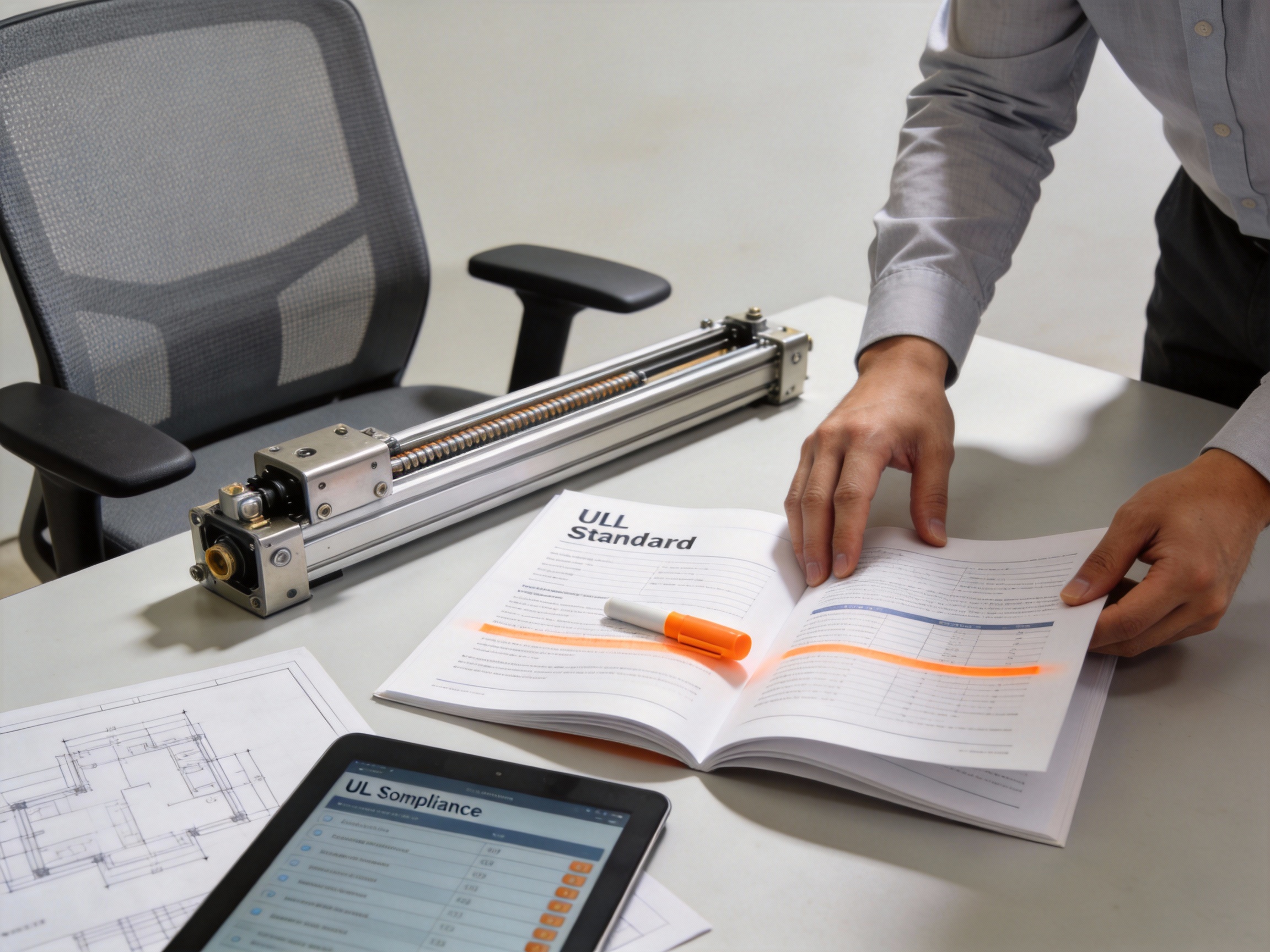
Navigating UL certification for linear actuators in furniture is a critical but often complex step. Many manufacturers face predictable hurdles during design and testing that lead to failing UL certification. Addressing these proactively is key to a smooth approval process.
1. Electrical Safety and Component Selection
1.1 Inadequate Overcurrent Protection
A common failure point is undersized or incorrectly rated fuses or circuit breakers. UL standards require protection devices to trip before the actuator's internal wiring or motor windings overheat, typically at 135% to 200% of the rated current.
Field experience shows that using generic, off-the-shelf fuses without verifying their time-current curve against the motor's locked-rotor current is a frequent oversight.
1.2 Non-Compliant Wiring and Connectors
Using wiring not rated for the application's voltage, current, or temperature will cause rejection. For furniture actuators, internal wiring must often withstand mechanical flexing.
Per UL 962 (Household and Commercial Furnishings), internal conductors must have sufficient strain relief. A best practice is to specify UL 1007 or UL 1015 rated wire and use UL-recognized terminal blocks or connectors.
Pro Tip: MEIMOVE engineers recommend creating a "critical components checklist" early in the design phase. Verify every electrical component—from the motor to the smallest capacitor—has a valid UL recognition file (Yellow Card) for its specific use in your assembly.
2. Mechanical and Endurance Testing Failures
2.1 Insufficient Load Cycle Endurance
Actuators must complete thousands of cycles under load without failure. A typical test requirement is 10,000 to 25,000 full extension/retraction cycles at 120-150% of rated load. Premature gear wear or motor burnout often indicates poor mechanical design or inadequate material selection.
Solutions include using hardened steel gears, optimizing lubrication, and implementing software-based current limiting to prevent motor stall damage.
Failing to demonstrate protection against pinch points or unexpected movement is a major compliance hurdle. Standards like UL 962 mandate safety cut-offs if an obstruction is detected.
Common solutions and their validation requirements include:
Current Sensing: Calibrate the system to detect a current spike exceeding a set threshold (e.g., 2.5x normal load) within 100ms.
Mechanical Clutches: Test to verify slip torque is consistent across 1,000 engagement cycles.
Software Limits: Provide code validation to show end-of-travel limits cannot be bypassed by a single component failure.
By anticipating these electrical and mechanical challenges, you can streamline your certification journey and build more reliable, compliant motorized furniture products.
Beyond UL: Other Important Standards for Smart Furniture Actuators
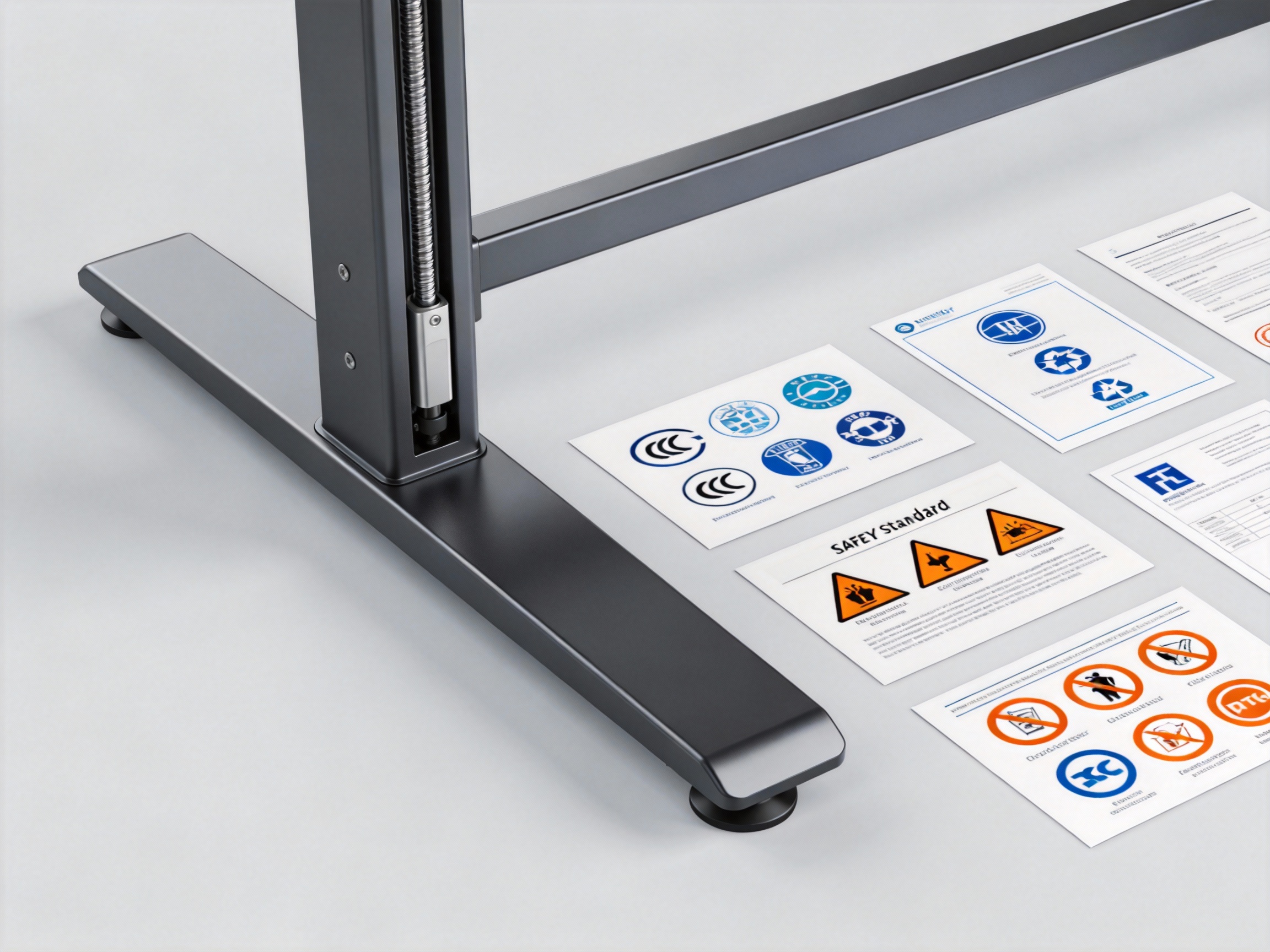
While UL certification is a critical benchmark for safety in the US market, a truly global product must navigate a broader regulatory landscape. For smart furniture actuators, compliance with international standards like IEC 60335 and regional marks like CE is essential for market access and user trust. MEIMOVE engineers design for this multi-standard environment from the outset.
1. Key International and Regional Standards
1.1 IEC 60335 for Household Appliance Safety
IEC 60335 is a globally recognized series of standards for the safety of electrical appliances. For smart furniture actuators, it specifically addresses risks like mechanical hazards, temperature limits, and protection against electric shock. Compliance is often a prerequisite for the CE marking in Europe.
Key tests include endurance cycles, abnormal operation checks, and insulation resistance verification at 500V DC.
1.2 The CE Marking and EMC Directives
The CE mark is a mandatory conformity declaration for products sold in the European Economic Area. For linear actuators, it involves demonstrating compliance with the Low Voltage Directive (LVD) and the Electromagnetic Compatibility (EMC) Directive.
This ensures the actuator operates safely and does not emit excessive electromagnetic interference that could disrupt other devices.
Pro Tip: MEIMOVE's compliance team advises starting with IEC 60335 testing early, as its requirements often form a solid foundation for meeting both UL and CE criteria, streamlining the certification process.
2. Geographic Applicability and Industry Benchmarks
2.1 Market-Specific Compliance Pathways
Understanding where a product will be sold dictates the primary compliance focus. In North America, UL/CSA is dominant; in Europe, CE based on IEC/EN standards is required; in other regions, IEC standards are widely accepted.
Some markets, like Australia and New Zealand, accept CE or require local certification based on IEC frameworks.
2.2 BIFMA and Furniture-Specific Guidelines
Beyond electrical safety, furniture standards matter. BIFMA (Business and Institutional Furniture Manufacturers Association) sets performance and durability benchmarks for office furniture in North America.
While not a law, BIFMA compliance is a key industry expectation for commercial-grade smart furniture, covering actuator-driven functions like load capacity and cycle life.
3. Standards Comparison and Strategic Selection
The table below provides a high-level comparison of key standards relevant to smart furniture actuators, helping to clarify their primary focus and geographic relevance.
Standard/Mark | Primary Focus | Key Geographic Applicability |
UL 1004 / UL 60730 | Motor safety & automatic controls | United States, Canada (as CSA) |
IEC 60335-1 & -2-95 | Household appliance general safety & furniture-specific hazards | European Union (basis for EN), Global reference |
CE Mark | Conformity with EU health, safety, and environmental directives | European Economic Area |
BIFMA | Furniture performance, durability, and safety | North America (industry standard) |
Navigating this matrix of standards is crucial for market success. A strategic approach to certification not only ensures safety but also streamlines global product launches, a consideration central to modern smart furniture design.
The Future of Safety: Evolving Standards for Connected Furniture Actuators
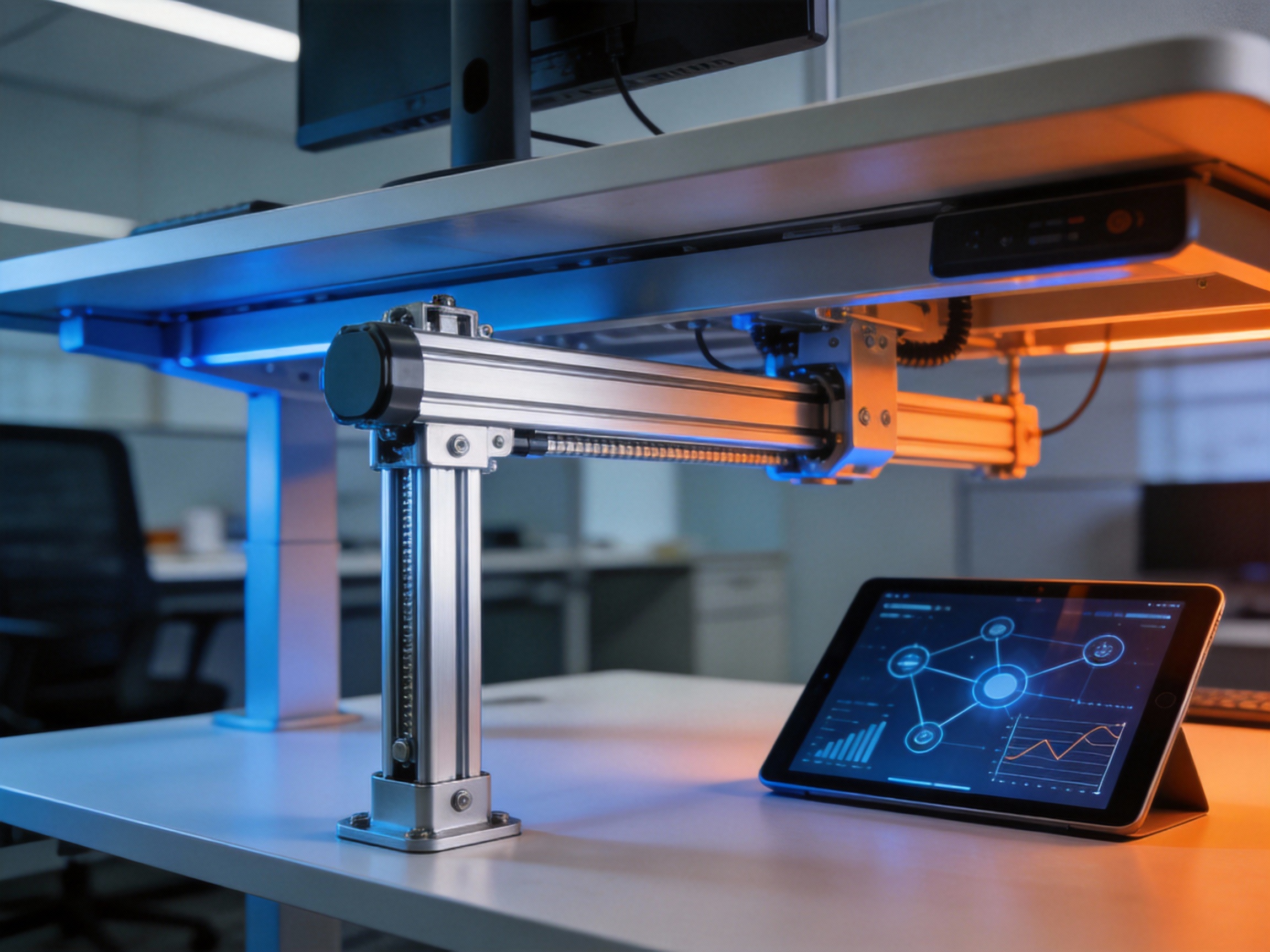
The integration of linear actuators in furniture with IoT and wireless controls is creating a new frontier for safety standards. Traditional mechanical and electrical safety frameworks must evolve to address risks from connectivity, software, and data. In practice, MEIMOVE engineers are already designing for these emerging requirements to ensure future-proof safety.
1. New Risk Factors in Connected Systems
1.1 Cybersecurity Vulnerabilities
Wireless controls introduce attack vectors like unauthorized actuation or data interception. A common mistake is treating the actuator as an isolated component, ignoring network-level threats. Standards like IEC 62443 for industrial cybersecurity are becoming relevant models for connected furniture systems.
Potential new risk factors include firmware tampering, denial-of-service attacks on control signals, and insecure data transmission from position sensors.
1.2 Software and Functional Safety
Safety now depends on software integrity for critical functions like obstacle detection and emergency stop. Field experience shows that a single erroneous line of code can cause unintended forceful movement. Future standards may mandate IEC 61508 SIL (Safety Integrity Level) assessments for drive logic.
This shifts focus from pure hardware durability to predictable software behavior under all operational and failure states.
Pro Tip: MEIMOVE's R&D team recommends implementing a secure boot process and encrypted communication as a baseline for any connected actuator design, going beyond basic motor safety.
2. Evolving Standardization Pathways
2.1 Convergence of Domains
Future standards will likely merge requirements from furniture safety (e.g., ANSI/BIFMA), electrical equipment (UL/CSA), and IoT devices (FCC). Expert prediction points to hybrid certifications, where an actuator is evaluated for mechanical load (150 lbs minimum), electromagnetic compatibility, and network security concurrently.
This holistic approach prevents gaps where a product passes individual tests but fails as an integrated system.
2.2 Predictive Maintenance and Data Integrity
Smart actuators generating performance data create a new safety layer: predictive failure alerts. However, standards must ensure this data is accurate and actionable. For instance, a false "motor overheating" signal could trigger unnecessary safety shutdowns, degrading user trust.
Key parameters for standardization will include sensor calibration intervals, data logging formats, and alert threshold validation methods.
Unauthorized network access leading to uncontrolled movement
Electromagnetic interference (EMI) disrupting wireless stop commands
Software bugs causing failure in safety-critical sensor fusion
Data privacy breaches from logged usage patterns
Power management faults in battery-backed emergency retraction systems
The trajectory is clear: safety for linear actuators in furniture is expanding from physical guarding to encompass cyber-physical system reliability.


Comments