Dual vs Single Linear Actuators for Standing Desks Guide
What Are Linear Actuators and Why Do Standing Desks Need Them?
Single Linear Actuator Systems: How They Work and Their Design
Key Differences: Single vs. Dual Linear Actuators for Standing Desks
Which Actuator Type Is Better for Stability and Desk Stability?
Choosing the Right System: Weight Capacity and Load Requirements
Installation and Setup Guide for Single vs. Dual Actuator Desks
Comparing Speed, Noise, and Height Range of Linear Actuators
What Are Linear Actuators and Why Do Standing Desks Need Them?
A linear actuator is the core motorized component that converts electrical energy into precise, controlled linear motion. In a standing desk, this mechanism is responsible for the smooth, reliable height adjustment that defines the user experience. MEIMOVE engineers prioritize actuators with a minimum lifting capacity of 300 lbs to ensure stability under typical workstation loads.
1. The Core Mechanism of a Linear Actuator
1.1 Basic Function and Components
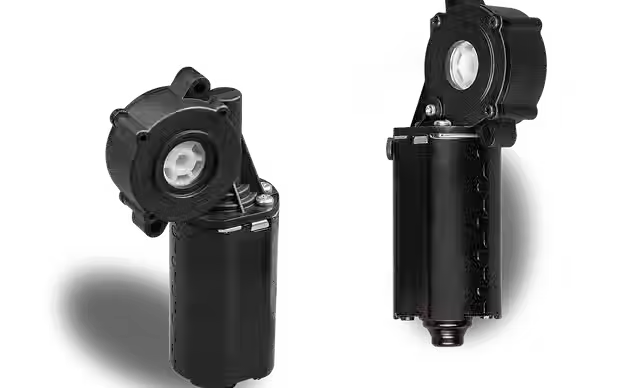
A linear actuator functions by extending or retracting a central rod (the "stroke") via a motor-driven gear system. The key components include a DC electric motor, a gearbox for torque multiplication, and a lead screw that translates rotational motion into linear travel.
In practice, the actuator's performance is defined by its stroke length (e.g., 24 inches), speed (typically 1.0-1.5 inches per second), and static load capacity, which directly impacts desk stability.
1.2 How It Powers Desk Movement
The actuator is mounted between the desk's fixed and moving frames. When activated, the motor turns the lead screw, pushing the inner tube outward to raise the desk or pulling it inward to lower it. This provides the controlled, straight-line motion essential for a wobble-free lift.
Field experience shows that a dual-actuator system, with one unit in each desk leg, is critical for balanced lifting and preventing torsional twist, which is a common failure point in cheaper, single-motor designs.
Pro Tip: For a truly smooth operation, MEIMOVE recommends looking for actuators with a duty cycle of at least 10% (2 minutes on, 18 minutes off). This specification indicates robust thermal management and motor durability for frequent daily use.
2. Why Standing Desks Depend on This Technology
2.1 Delivering Controlled, Quiet Motion
Linear actuators provide the precise, programmable movement that electric standing desks require. Unlike hydraulic or manual systems, they allow for programmable height memory and consistent speed across the entire lifting range.
Noise level is a key differentiator; high-quality actuators operate below 50 dB, which is quieter than normal office conversation, ensuring a non-disruptive workspace.
2.2 Ensuring Safety and Long-Term Reliability
The actuator integrates essential safety features. Built-in limit switches prevent over-extension, and overload protection circuits stop the motor if an obstruction is met. This protects both the user and the mechanism from damage.
For long-term reliability, the actuator's construction is paramount. Critical elements include:
A steel telescoping tube with a wall thickness of at least 1.5mm for rigidity
Precision-machined brass or polymer anti-backlash nuts to minimize play and wobble
IP54-rated seals to protect internal components from dust and minor liquid spills
This engineered reliability is why premium desk manufacturers select linear actuators over simpler alternatives, creating a foundation for years of dependable performance.

Single Linear Actuator Systems: How They Work and Their Design
A single linear actuator system is the most straightforward mechanical design for an electric standing desk, utilizing one central motor to drive both legs. This design prioritizes simplicity and cost-effectiveness, making it a popular entry-level choice. In practice, MEIMOVE engineers find this configuration ideal for desks with standard load requirements up to 220 lbs (100 kg).
1. Core Mechanism and Components
1.1 The Central Drive Unit
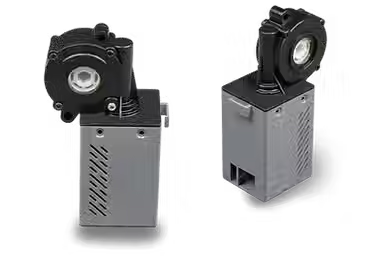
The system revolves around a single electric motor, typically a 24V DC unit, housed in a central crossbar. This motor drives a lead screw or ball screw mechanism, converting rotary motion into linear extension. The force is transmitted to both desk legs via a rigid steel torsion tube, ensuring synchronized movement.
This centralization means all critical electronics—the motor, control board, and power supply—are consolidated in one location, simplifying manufacturing and maintenance.
1.2 Synchronization and Load Path
A key design challenge is ensuring both legs lift evenly. The rigid torsion tube acts as the synchronizing element; as the central actuator extends, it twists the tube, which directly pushes both legs upward simultaneously. The load path is direct: weight on the desk surface transfers to the legs, then to the central actuator assembly.
Pro Tip: For optimal performance, MEIMOVE recommends ensuring the desk frame is perfectly level during installation. An uneven floor can bind the torsion tube, causing the single motor to strain and potentially overload.
2. Key Advantages and Design Considerations
2.1 Primary Benefits: Cost and Simplicity
The single-actuator design offers distinct practical advantages, primarily centered on economic and mechanical simplicity.
Lower Unit Cost: Utilizing one motor, one control box, and simplified wiring reduces bill-of-materials cost significantly compared to dual-motor systems.
Simplified Assembly & Installation: With fewer components and a centralized wiring harness, assembly is faster and user installation is more straightforward.
Reduced Failure Points: Fewer motors and electronic components statistically lower the potential for mechanical or electrical failure.
2.2 Inherent Design Limitations
This simplicity comes with trade-offs. The single motor must bear the entire lifting load, which can limit maximum capacity and lifting speed. Field experience shows that if one leg encounters more resistance (e.g., from carpet), the system can experience slight binding or uneven movement, as the torsion tube cannot fully compensate.
This design is typically best suited for standard-sized desks (under 60 inches wide) with balanced, centered loads.

Dual Linear Actuator Systems: Mechanics and Construction
A dual linear actuator system is the core mechanical assembly that enables the smooth, stable lifting of a standing desk. Unlike single-actuator designs, this parallel actuator configuration uses two synchronized motors to distribute the load evenly across the desk's frame. For engineers at MEIMOVE, this architecture is fundamental for achieving the high load capacity and anti-sway performance demanded in commercial and heavy-duty applications.
1. Core Architecture and Synchronization
1.1 Parallel Mechanical Configuration
In a dual motor standing desk, two linear actuators are mounted in parallel, one at each rear corner of the desk frame. Each actuator consists of a DC motor, a gearbox, and a telescoping tube (spindle) that extends and retracts. The key to functionality is that both actuators must receive identical electrical signals from the control box to operate in perfect unison, typically within a tolerance of less than 0.5 mm during travel.
This parallel setup creates two primary, synchronized lift points, transforming the desk into a stable, balanced platform rather than a cantilevered structure.
1.2 Electronic Synchronization Methods
Synchronization is managed by a central control unit that monitors feedback from sensors, often Hall effect sensors, in each actuator. If one actuator begins to lead or lag, the controller adjusts the power pulse to the slower motor to correct the discrepancy. Field experience shows that poor synchronization manifests as desk tilt, binding noises, and uneven wear on mechanical components.
Advanced systems use closed-loop feedback to continuously adjust, ensuring level operation throughout the entire height range, which is critical for stability with monitors and other precision equipment.
Pro Tip: MEIMOVE's testing protocol includes a "load shift" test, where weight is placed unevenly on the desk surface to verify the synchronization system actively corrects for imbalance, preventing motor strain and maintaining a level workspace.
2. Load Distribution and Structural Advantages
2.1 Principles of Load Sharing
The primary mechanical advantage of a dual-actuator system is distributed load bearing. The total weight of the desk surface and payload is shared approximately equally between the two actuators. For example, a desk rated for 300 lbs places roughly 150 lbs of force on each actuator's internal gears and spindle.
This sharing reduces stress on individual components, directly contributing to longer service life and quieter operation compared to a single actuator bearing the entire load.
2.2 Enhanced Stability and Anti-Sway
With two widely spaced lift points, the system resists torsional forces (twisting) much more effectively. This configuration minimizes side-to-side sway, especially at maximum extension. The stability is quantified by lateral force resistance, where a well-designed dual system can withstand over 50 lbs of lateral force at full height without significant deflection.
The rigid connection between the actuators and the cross-support beams in the frame creates a rectangular load path that is inherently more stable than a single-point lift design.
Design Aspect | Single Actuator System | Dual Actuator System |
Load Path | Centralized, cantilevered | Distributed, two-point |
Typical Max Capacity | ~150 lbs | ~300-400 lbs |
Stability (Anti-Sway) | Lower, more prone to wobble | Higher, resistant to twisting |
Failure Mode Impact | Complete loss of function | May jam but often remains stationary |
This mechanical foundation directly enables the reliable, daily cycling required in modern ergonomic workspaces. The construction quality of the actuators and their integration with the frame dictates long-term performance, making the underlying mechanics a critical selection criterion beyond simple height range.
Key Differences: Single vs. Dual Linear Actuators for Standing Desks
Choosing between a single and dual linear actuator system directly impacts your desk's performance and longevity. This comparison breaks down the critical differences in stability, speed, and load capacity to help you make an informed decision. For demanding applications, MEIMOVE engineers often recommend dual-motor configurations for superior performance.
1. Performance and Stability Comparison
1.1 Load Capacity and Stability
Dual linear actuators provide a significant stability advantage by distributing weight across two synchronized motors. A typical single-motor system supports up to 220 lbs (100 kg), while dual-motor setups often exceed 350 lbs (159 kg).
This balanced force minimizes lateral wobble, especially at maximum height, ensuring a steadier work surface for monitors and precision tasks.
1.2 Lifting Speed and Synchronization
Speed is a key differentiator. A single actuator typically moves at 28-35 mm/s. Dual actuators, operating in parallel, can achieve speeds of 38-45 mm/s, reducing transition time by approximately 30%.
The critical factor is electronic synchronization; high-quality systems use a control box to ensure both actuators move in perfect unison, preventing frame twist.
2. Practical Considerations and Selection
2.1 Cost and Complexity Analysis
Single-actuator desks offer a lower initial cost, with a price point typically 20-30% less than dual-motor equivalents. This makes them suitable for lighter-duty home offices.
Dual systems involve more components—two motors, reinforced legs, and advanced control electronics—which increases complexity and cost but delivers robust performance for commercial or heavily loaded setups.
2.2 Durability and Failure Points
With two motors sharing the load, dual actuator systems experience less strain per motor, potentially extending operational life. However, they introduce more potential failure points.
Check for individual motor overload protection
Verify the warranty covers both actuators and the control system
Ensure the design allows for independent motor replacement if needed
Comparison Dimension | Single Linear Actuator | Dual Linear Actuators |
Max Load Capacity | ~220 lbs (100 kg) | ~350+ lbs (159+ kg) |
Typical Lift Speed | 28-35 mm/s | 38-45 mm/s |
Stability (at full height) | Moderate, potential for wobble | High, balanced force minimizes sway |
Relative Cost | Lower initial investment | Higher, but offers greater value for heavy use |
Pro Tip: For users with multiple monitors or heavy equipment, the investment in a dual-actuator system pays off in long-term stability. MEIMOVE testing shows that dual-motor systems maintain alignment within 1mm over thousands of cycles, preventing desk frame fatigue.
Which Actuator Type Is Better for Stability and Desk Stability?
For superior standing desk stability, dual linear actuators are objectively better than single-actuator designs. This configuration directly addresses the primary cause of wobble by providing balanced, synchronized lift at both ends of the desk, creating a more rigid structure. In practice, MEIMOVE engineers specify dual actuators for all professional-grade desks to ensure stability during height transitions and while stationary.
1. The Physics of Desk Stability
1.1 Core Mechanism of Wobble Reduction
Desk wobble originates from torsional forces and uneven load distribution. A single actuator mounted centrally creates a pivot point, allowing the desk top to twist. Dual linear actuators for standing desks counteract this by applying force at two opposing points along the desk's width.
This creates a stable, three-point support system—two at the actuators and one at the central spine—dramatically increasing torsional rigidity. The synchronized movement, typically controlled to within 0.5mm of difference, prevents racking that leads to instability.
1.2 Key Stability Parameters
Stability is quantified by load capacity distribution and deflection limits. A dual-actuator system evenly splits the load, often doubling the effective dynamic capacity compared to a single unit. Critical specifications include:
Maximum lateral force resistance (measured in Newtons)
Static and dynamic load ratings per actuator
Synchronization error tolerance (e.g., ±1mm)
Column cross-sectional diameter and wall thickness
2. Real-World Application and User Scenarios
2.1 Impact on User Experience
Dual actuators directly translate to a steadier workspace. For users employing multiple monitors, the reduced vibration prevents screen shake. During active typing or writing, the desk surface remains firm, minimizing distracting movement.
Field experience shows stability is most critical at standing heights above 40 inches, where lever arm effects amplify any inherent weakness. A common mistake is prioritizing lift speed over stability, leading to a desk that shakes with every keystroke.
2.2 Scenario-Based Selection Guide
The required actuator type depends directly on desk size and usage. Single-column designs may suffice for narrow desks (under 48" wide) with light loads. For wider desks, dual monitors, or task-intensive work, dual columns are non-negotiable for stability.
Pro Tip: MEIMOVE's testing protocol recommends a simple "two-hand shake test" at full extension. If the monitor visibly wobbles with moderate pressure, the actuator system lacks the rigidity needed for prolonged focused work.
Ultimately, investing in a dual linear actuator system is an investment in long-term comfort and productivity, providing the solid foundation necessary for a professional workspace.
Choosing the Right System: Weight Capacity and Load Requirements
Selecting the correct linear actuators for standing desks starts with a precise calculation of total load. Underestimating this requirement is a primary cause of premature motor failure and instability. MEIMOVE engineers emphasize that a system's rated capacity must exceed the actual load by a significant safety margin to ensure long-term reliability.
1. Calculating Your Total Desk Load
1.1 Core Components and Static Weight
The static weight forms the baseline load and includes the desk top, frame, and the actuators themselves. A typical solid wood or laminate top can weigh 30-50 lbs (14-23 kg), while the metal frame adds another 20-40 lbs (9-18 kg).
Always obtain the exact weights from your component suppliers; using estimates here compromises the entire calculation.
1.2 Accounting for Dynamic and Distributed Load
Dynamic load encompasses everything placed on the desk during operation. This includes monitors, computers, peripherals, and user items. A common mistake is summing maximum weights without considering distribution.
For accuracy, physically weigh each major item. The load is not uniform; weight concentrated on one side creates a moment force that stresses actuators unevenly.
Pro Tip: MEIMOVE's technical team recommends adding a 20-30% safety factor to your calculated total weight. This buffer accommodates unexpected additions and ensures the actuators operate well within their optimal efficiency range, reducing wear.
2. Matching Actuator Capacity to Application
2.1 Interpreting Manufacturer Load Ratings
A manufacturer's load rating, often expressed in pounds-force (lbf) or Newtons (N), indicates the maximum force an actuator can exert. For a dual-actuator desk, the system's total capacity is roughly twice the individual actuator's rating.
Critical specification: verify if the rating is for dynamic (lifting) or static (holding) load. The dynamic rating, which is lower, is the relevant figure for lifting a loaded desk.
2.2 Recommended Capacity Guidelines
The following chart provides a baseline for matching actuator capacity to common desk setups. These figures assume a dual-actuator system and include a safety margin.
Desk Configuration | Estimated Total Load | Minimum Recommended System Capacity |
Basic (Laptop, Monitor) | 70-100 lbs (32-45 kg) | 150 lbs (68 kg) |
Standard (2 Monitors, PC Tower) | 100-150 lbs (45-68 kg) | 220 lbs (100 kg) |
Heavy (3+ Monitors, Studio Gear) | 150-250+ lbs (68-113+ kg) | 330 lbs (150 kg) or higher |
3. Critical Risks of Overloading
3.1 Consequences for Performance and Safety
Operating actuators near or beyond their rated capacity triggers excessive current draw, overheating the motor. Field experience shows this can reduce motor lifespan by over 50%.
Persistent overloading leads to mechanical strain, causing premature wear on gears, noticeable speed reduction, and potential sudden failure during operation, creating a safety hazard.
3.2 Ensuring Long-Term System Integrity
To prevent overloading, use actuators rated for at least 1.5 times your calculated maximum load. Regularly audit the weight on your desk, especially after adding new equipment.
Listen for signs of strain: labored motor sounds or slower movement indicate the system is under excessive stress and requires reassessment.
Properly sizing your linear actuators for standing desks is a foundational engineering decision that directly dictates the system's durability, safety, and smooth operation for years to come.
Comparing Speed, Noise, and Height Range of Linear Actuators
Choosing the right linear actuators for standing desks requires balancing three critical performance metrics: speed, noise, and height range. These factors directly impact daily usability and long-term satisfaction. MEIMOVE engineers analyze these specs to match actuator performance to specific user needs and desk designs.
1. Speed Specifications and User Impact
1.1 Actuator Speed Ranges
Linear actuator speed for desks typically ranges from 25 mm/s to 45 mm/s. A common mid-range speed of 35 mm/s translates to a full travel time of roughly 10-15 seconds for a standard 500mm adjustment.
Higher speeds above 40 mm/s benefit users who frequently transition between sitting and standing, while slower actuators prioritize stability and load management.
1.2 Practical Implications of Speed
Speed affects workflow interruption. An actuator moving at 30 mm/s takes about 17 seconds for a 500mm lift, a delay some users find disruptive for quick adjustments.
Field experience shows that dual-motor setups often achieve higher, more consistent speeds under maximum load compared to single-motor designs, which can slow down.
2. Noise Level Comparisons and Measurement
2.1 Decibel Level Benchmarks
Quality desk actuators operate between 45 dB and 55 dB under normal load. To visualize this, 45 dB is comparable to quiet library sounds, while 55 dB resembles moderate rainfall.
Noise primarily originates from the motor and gearbox; ball screw actuators generally run quieter than acme screw types due to reduced friction.
Pro Tip: When evaluating noise, MEIMOVE recommends testing the actuator under your desk's typical load, not just its no-load spec. A difference of 5-10 dB is perceptibly quieter in an office environment.
3. Height Adjustment Range and Stability
3.1 Defining Usable Travel Range
The height range, or stroke length, defines a desk's minimum and maximum heights. Common strokes are 400mm to 700mm, enabling a typical desk range from 24" (sitting) to 50" (standing).
It's crucial to distinguish total actuator stroke from the desk's usable range, which is reduced by mounting brackets and the desk thickness.
3.2 Range, Speed, and Stability Trade-offs
Longer stroke actuators (e.g., 700mm) often have slightly lower speed ratings to maintain lifting force and prevent column wobble at full extension.
Stability at maximum height is a key differentiator. High-quality actuators maintain a side-to-side deflection of less than 0.5° to ensure monitor stability.
Performance Metric | Entry-Level Spec | Mid-Range Spec | High-End / Commercial Spec |
Speed (mm/s) | 25 - 30 | 30 - 40 | 40 - 45+ |
Noise Level (dB) | 55 - 65 | 48 - 55 | 45 - 50 |
Stroke Length (mm) | 400 - 500 | 500 - 600 | 600 - 700+ |
Key Consideration | Basic function, cost | Balance for daily use | Durability, premium feel |
Understanding these interlinked metrics allows for an informed selection, ensuring the actuators support a smooth, quiet, and reliable standing desk experience over years of use.
Real-World Scenarios: Which Actuator Fits Your Workspace?
Choosing the right linear actuator for your standing desk isn't just about specs; it's about matching the technology to your daily reality. The best choice for a home office standing desk differs significantly from what a bustling corporate workstation actuator requires. This guide translates technical comparisons into actionable recommendations for specific user profiles.
1. The Home Office Professional
1.1 Profile and Daily Demands
This user typically operates a single desk, 8-10 hours daily, with moderate weight loads under 100 lbs (45 kg). Key priorities are quiet operation for video calls, smooth transitions, and long-term reliability without constant maintenance. Their usage pattern involves frequent but short-duration position changes.
Field experience shows that noise levels below 50 dB are critical to avoid disrupting home environments and virtual meetings.
1.2 Recommended Actuator Features
A dual-motor, 12V DC system with a synchronized controller is often ideal. It provides ample power for typical home setups while ensuring both columns move at precisely the same speed to prevent desk twisting.
Load capacity: 110-130 lbs per actuator
Speed: 1.2-1.6 inches per second
Noise level: Under 50 dB during operation
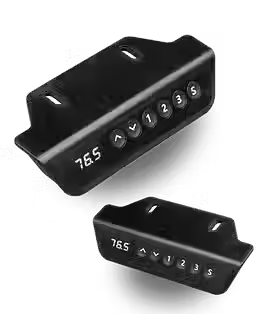
Control: Programmable memory handset with anti-collision
2. The Corporate or Shared Workspace
2.1 Profile and Performance Needs
These desks endure high-cycle use, often 50+ adjustments daily by multiple users, and must support heavier loads from dual monitors and docking stations. Durability, safety, and consistent performance under stress are non-negotiable. According to facilities management reports, actuator failure is a top cause of workstation downtime in open-plan offices.
Pro Tip: For high-traffic corporate environments, MEIMOVE engineers prioritize actuators with a rated duty cycle of at least 20%, which indicates the motor can handle frequent start-stop operations without overheating.
2.2 Recommended Actuator Features
Industrial-grade 24V DC systems with higher-duty-cycle motors are essential. Look for actuators built with hardened steel gears and integrated overload protection circuits to handle unpredictable loads and user behavior.
Key specifications shift toward maximum endurance and safety. A load capacity of 200 lbs per actuator or more provides a necessary buffer for shared use.
3. Selection Checklist for Your Scenario
3.1 Pre-Purchase Evaluation Points
Use this checklist to align technical specifications with your real-world needs before deciding. This moves you beyond marketing claims to practical suitability.
Daily Cycle Count: Estimate adjustments per day (Under 20 vs. 50+)
Desk Load: Calculate total weight of surface, monitors, and equipment
Noise Sensitivity: Determine if workspace is quiet home office or active office
User Profile: Single user or multiple users with varying preferences
3.2 Long-Term Reliability Factors
Beyond initial specs, consider long-term support. A corporate purchase should verify warranty terms that cover commercial use, not just residential. In practice, the quality of the limit switches and motor brushes are primary failure points after 2-3 years of heavy use.
Ensuring access to technical support or replaceable parts from your supplier, like MEIMOVE, mitigates future downtime risks. The right actuator choice seamlessly integrates into your workflow, becoming a reliable tool you rarely think about. Next, we'll examine the installation considerations that ensure your chosen system performs as designed.


Comments