Actuators Help Us In Our Everyday Life
How Actuators Power Your Home Appliances
In the realm of electrical engineering, actuators serve as vital components that bring our appliances to life. Actuators in everyday life transform electrical energy into mechanical motion, enabling devices to perform various functions seamlessly. Think of them as the muscle behind the technology, empowering everything from washing machines to automated blinds.

Types of Actuators
Actuators come in various forms, each designed for specific applications in modern appliances. Common types include electric, pneumatic, and hydraulic actuators. These devices convert input signals into physical movement, making them essential for household efficiency.
How Actuators Enhance Convenience
With daily chores becoming more automated, actuators contribute to enhanced convenience in our lives. They enable appliances to operate with minimal human intervention, significantly saving time and effort. A simple voice command can trigger a robotic vacuum, showcasing how integrated actuators can transform our domestic experience.
Remote-controlled garage doors
Smart thermostats
Automated window coverings
These devices cater to the needs of a tech-savvy society, showcasing the impact of actuators in everyday life.
Appliance | Type of Actuator | Function |
Washing Machine | Electric | Agitation and spinning |
Garage Door | Pneumatic | Opening and closing |
Smart Thermostat | Electric | Temperature control |
The Future of Actuators in Home Automation
As technology evolves, so does the role of actuators in enhancing home automation. Connected devices are becoming standard, with actuators playing a pivotal role in this transformation.
Greater energy efficiency
More precise control
Improved safety features
"Actuators are not just components; they are the driving force behind our modern appliances, making life easier and more efficient."
Explore more insightful articles like this one – we have plenty more for you to discover here !
Innovative Uses of Actuators in Transportation
Actuators play a crucial role in enhancing our daily experiences, especially in the transportation sector. These devices convert energy into motion, allowing for precision control in various applications. Actuators in everyday life are seen in vehicles, trains, and even aviation, providing benefits that streamline operations, improve safety, and enhance user comfort. Their presence isn't just technological; it has become instrumental in reshaping how we interact with transportation.

Enhanced Vehicle Control
Modern vehicles are equipped with numerous actuators, particularly in systems like electronic stability control and adaptive cruise control. This technology helps maintain vehicle stability by adjusting braking and throttle automatically. In a world where road safety is paramount, the integration of such mechanisms is vital. Clearly, actuators enhance safety and ensure a smoother driving experience for users. Here is our homepage.
Smart Aviation Systems
In aviation, actuators manage various functions, from controlling flaps to adjusting wing positions for optimal lift. Their precision is critical for both safety and efficiency during flight. Insomuch as they enable flight paths to be adjusted dynamically, they empower pilots to respond effectively to changing conditions, ensuring that travel is both safe and efficient. To meet the ultimate in efficiency and responsiveness in modern applications, many engineers and designers are turning to more specialized powertrains.
Adaptive Cruise Control
Electronic Stability Control
Wing Flaps Adjustment
Both consumer and commercial sectors witness the impact of actuators in everyday life. Their applications enhance vehicle efficiency and safety while improving passenger experiences across different transport modes. In many applications where high load capacity is required, high speed is not enough. A drive solution with strong torque output is the key.
Type of Actuator | Application | Benefits |
Electric | Car windows, seats | Increased comfort, convenience |
Pneumatic | Aircraft flaps | Precision control |
Future Trends in Actuator Technology
The future holds exciting advancements in actuator technology, with trends like the rise of smart actuators and AI integration. As transportation continues to evolve, these innovations will redefine aspects of safety and efficiency. Continuous exploration is vital to harness their full potential and elevate transportation systems worldwide. Explore more insightful articles like this one – we have plenty more for you to discover here!
Smart Actuators
Fuel Efficiency Improvements
AI Integration in Controls
Exploring Actuators in Modern Manufacturing
Actuators play a vital role in modern manufacturing, impacting various aspects of our lives. These devices convert electrical energy into mechanical movement, functioning as the backbone of automation systems. Whether you're aware of it or not, actuators in everyday life can be found in household appliances, automotive systems, and industrial machinery. Understanding their functionality helps us appreciate how they enhance efficiency, safety, and performance in different sectors.

Types of Actuators
There are primarily three types of actuators: pneumatic, hydraulic, and electrical. Each type is designed for specific tasks and brings unique advantages. Pneumatic actuators utilize air pressure, making them suitable for lightweight applications. Hydraulic actuators are favored in heavy machinery, offering superior force application. Electrical actuators are prevalent in home devices, providing precise control for various functions, significantly improving our daily experiences.
Applications in Everyday Life
From adjusting your car seat to controlling HVAC systems, actuators are key to performance across many domains. In industries, they facilitate high-speed and precise movements, enhancing operational efficiency. The use of these devices is also growing in robotics, where actuators allow for smooth and accurate actions, shaping the future of automation and everyday tasks.
Robotics
Automotive systems
Home appliances
Industrial machinery
HVAC systems
With an increasing reliance on automation, the influence of actuators in everyday life is undeniable. Below is a brief overview of their types and uses in common devices:
Type of Actuator | Common Uses |
Pneumatic | Vending machines, air-powered tools |
Hydraulic | Construction equipment, car lifts |
Electrical | Robotic arms, adjustable beds |
The Future of Actuators
The future of actuators looks promising, with advances in technology leading to smarter, more efficient systems. Emerging trends include the integration of IoT and AI, which will allow actuators to adapt and respond in real-time. As these innovations unfold, expect even greater enhancements to the role of actuators in everyday life.
Increased efficiency
Greater precision
Smarter automation
"Actuators are not just components; they are enablers of modern conveniences and efficiencies."
Actuators in Everyday Life: Enhancing Comfort
Actuators in everyday life play a crucial role in enhancing our comfort and convenience by automating various tasks. These devices convert energy into motion, improving the functionality of everyday systems like heating, ventilation, and air conditioning (HVAC) systems. With the increasing integration of technology in homes, actuators are becoming ever more essential as they help to manage and control our living environments effectively. By understanding their role, we can appreciate how they contribute to a more comfortable, efficient lifestyle.
Common Applications of Actuators
Actuators can be found in numerous devices that we interact with daily, from automatic doors to power windows in vehicles. They allow for smooth operations of different systems, ensuring convenience and resource efficiency. In smart homes, actuators work hand in hand with sensors and controllers to create a harmonious living space tailored to our preferences.
Benefits of Actuators
Incorporating actuators into everyday life supplies numerous advantages. They enhance convenience, foster energy efficiency, and provide precise control over home systems.
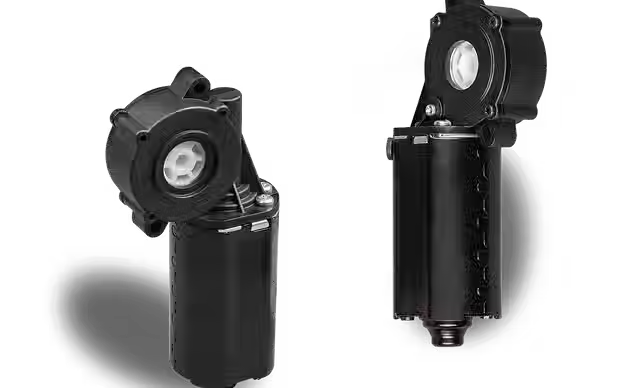
To meet the ultimate in efficiency and responsiveness in modern applications, many engineers and designers are turning to more specialized powertrains. If you're looking for a drive solution that combines speed and stability, the Speed-focused Motor is the ideal choice. It not only improves overall operating efficiency, but also demonstrates superior acceleration and precise control in mission-critical applications.
Increased comfort through automated adjustments.
Enhanced energy savings by optimizing resource usage.
Improved accessibility for individuals with mobility challenges.
As these benefits illustrate, actuators significantly impact our day-to-day lives.
Application | Type of Actuator | Benefit |
HVAC Systems | Linear Actuator | Temperature Control |
Automated Gates | Rotary Actuator | Access Convenience |
Smart Blinds | Servo Actuator | Light Regulation |
The Future of Actuators
Looking ahead, advancements in actuator technology will lead to even greater enhancements in our comfort and convenience. Innovations like smart actuators, capable of learning user preferences, indicate a bright future.
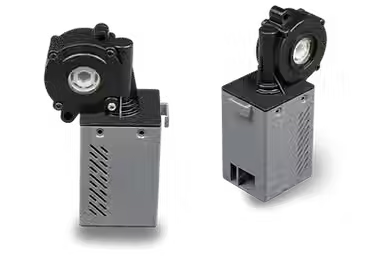
In many applications where high load capacity is required, high speed is not enough. A drive solution with strong torque output is the key, and the Torque -focused Motor is designed to cope with high loads and high resistance environments, and maintains a stable and strong power output at low speeds, which is widely used in industrial automation, heavy machinery, and lifting and lowering systems in the smart home.
Integration with IoT for personalized settings.
Smart home compatibility for seamless automation.
Increased energy efficiency through AI algorithms.
“Actuators in everyday life are not just devices; they are conduits for creating smarter, more comfortable living experiences.”
Explore more insightful articles like this one – we have plenty more for you to discover here !
Future Trends of Actuators in Our Lives
Actuators in everyday life play a pivotal role in transforming our interaction with technology. As automation continues to infiltrate various sectors, the sophistication and functionality of actuators are evolving. These devices, which convert energy into motion, become increasingly crucial in smart homes, autonomous vehicles, and industrial applications. They significantly enhance efficiency and convenience, creating a more seamless experience in our daily tasks.

Smart Homes
In smart homes, actuators are integrated into appliances and systems, enabling remote control and automation. Imagine your curtains automatically adjusting with the time of day, or your thermostat adjusting based on your preferences without manual input. These innovative applications help save energy and enhance comfort, demonstrating how actuators are weaving into our lives. To meet the ultimate in efficiency and responsiveness in modern applications, many engineers and designers are turning to more specialized powertrains. If you're looking for a drive solution that combines speed and stability, the Speed-focused Motor is the ideal choice. It not only improves overall operating efficiency, but also demonstrates superior acceleration and precise control in mission-critical applications.
Healthcare Innovations
Actuators are revolutionizing healthcare with technologies like robotic surgery and prosthetics. These devices allow for precision and control that humans alone cannot achieve, ultimately improving patient outcomes. The future holds even more possibilities, from wearables that adapt to health metrics to smart devices that provide real-time feedback. In many applications where high load capacity is required, high speed is not enough. A drive solution with strong torque output is the key, and the Torque-focused Motor is designed to cope with high loads and high resistance environments, and maintains a stable and strong power output at low speeds, which is widely used in industrial automation, heavy machinery, and lifting and lowering systems in the smart home.
Automated lighting systems
Temperature regulation in homes
Adaptive prosthetic technology
Robotic assistance in surgeries
Application | Benefit |
Smart Appliances | Convenience and energy savings |
Robotics | Enhanced precision in surgeries |
Automotive Developments
In the automotive sector, actuators are crucial in the advancement of self-driving cars. These systems rely on actuators for steering, braking, and acceleration, making automotive technology safer and more efficient. The adjustability and stability of hospital beds in healthcare environments have a direct impact on patient comfort and care efficiency, and the HDM Actuator for Hospital Bed has been designed for hospital use, with silent operation, high load capacity, and multi-stage precision adjustments to provide powerful and reliable power support for modern hospital beds, and to help build a more humanized and intelligent healthcare space.
Adaptive cruise control
Automatic emergency brakes
Self-parking features
Actuators are the backbone of modern technology, quietly driving our lives forward. Explore more insightful articles like this one – we have plenty more for you to discover
FAQs About Actuators in Daily Use
Actuators in everyday life are more prevalent than we often realize. From kitchen appliances to transportation systems, actuators perform essential functions, providing movement and control in various devices. By transforming energy into mechanical motion, these components offer conveniences that enhance our daily routines. Understanding their operation can help highlight just how intertwined they are with modern technology.
If you have any questions or are interested in our products, feel free to contact us
What Are Common Examples of Actuators?
Integral to the functioning of numerous devices, actuators can be found in many forms. Common examples include electric motors in washing machines, pneumatic actuators in control valves, and hydraulic systems in cars and airplanes. These components not only automate processes but also improve efficiency, making our lives easier and more comfortable.
How Do Actuators Enhance Safety?
Actuators play a critical role in enhancing safety across various sectors. In automotive systems, for instance, they control braking systems, airbags, and seat adjustments, ensuring that vehicles operate safely. In industrial setups, they automate emergency systems, thereby minimizing risks and accidents on site.
Electric Actuators
Pneumatic Actuators
Hydraulic Actuators
Linear Actuators
Type of Actuator | Common Uses |
Electric | Appliances, Robotics |
Pneumatic | Manufacturing, Packaging |
Hydraulic | Aerospace, Construction |
What’s the Future of Actuators?
The future of actuators is poised for innovation. With advances in technology and integration into IoT devices, we can expect more intelligent and efficient actuator systems that respond more dynamically to our needs. Such developments will surely redefine the concept of automation in daily life.
Explore more insightful articles like this one – we have plenty more for you to discover here!
Smart Home Integration
Enhanced Energy Efficiency
Robotic Assistants
Actuators are the unsung heroes of automation, weaving their way into our lives in ways we often don’t notice.


Comments