The 4 Types Of Linear Actuators
Exploring Different Types of Linear Motion Actuators
When it comes to automation and precise movement in various applications, understanding the different types of linear actuators is essential. Linear actuators can broadly be categorized into electric, pneumatic, hydraulic, and mechanical systems, each offering unique advantages. Electric linear actuators are often favored for their accuracy and simplicity, while pneumatic types provide rapid movement ideal for lightweight operations. Meanwhile, hydraulic actuators are powerful and suitable for heavy loads, and mechanical options are often utilized for manual settings.

Electric Linear Actuators
Electric linear actuators are driven by electric motors, converting rotational motion into linear movement. They are highly precise and can easily be integrated with control systems, making them ideal for applications ranging from robotics to industrial machinery. The ability to control speed and position accurately sets electric actuators apart in many automation scenarios.
Pneumatic and Hydraulic Actuators
Pneumatic actuators leverage compressed air for operation, providing quick and efficient movement while being relatively lightweight. Conversely, hydraulic actuators use liquids to generate force, allowing for significant power in compact spaces. Each linear actuator type has its unique role in optimized performance across various sectors.
Electric Actuators: Precision and control
Pneumatic Actuators: Rapid response and low weight
Hydraulic Actuators: High force at compact sizes
Mechanical Actuators: Manual operation versatility
Deciding which of the linear actuator types to use depends on the specific requirements of your application. Consider factors like load capacity, speed, and environment.
Type | Application | Pros |
Electric | Robotics | High precision |
Pneumatic | Packaging | Fast operation |
Hydraulic | Manufacturing | High power |
Mechanical | Furniture | Manual control |
Conclusion
Choosing the right linear actuators types for your project is vital for optimal results. Evaluating the characteristics and available options can significantly enhance performance.
Assess load requirements.
Consider space constraints.
Evaluate speed and control needs.
“The best actuator is the one that perfectly fits your project’s specifications!”
Features and Benefits of Each Linear Actuator Type
Understanding the various linear actuators types helps in selecting the right one for specific applications. Each type—electromechanical, hydraulic, and pneumatic—offers unique features and benefits, catering to diverse industrial needs. For instance, electromechanical actuators are renowned for their precision and speed, making them ideal for robotic applications. Hydraulic actuators, on the other hand, are preferred in heavy lifting scenarios due to their immense force capabilities. Pneumatic actuators are celebrated for their quick response times, which are advantageous in packaging and sorting tasks.

Electromechanical Linear Actuators
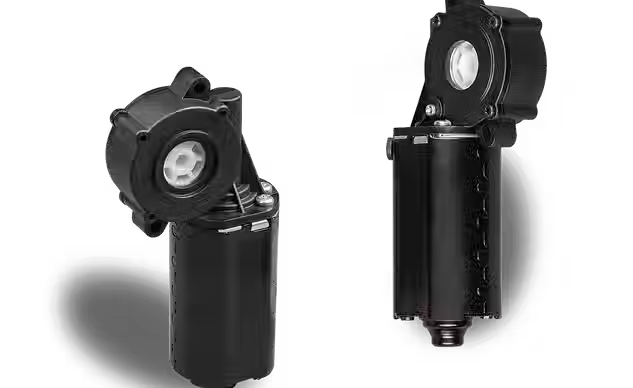
Electromechanical actuators convert electrical energy into mechanical motion with high efficiency. They offer high precision, control, and responsiveness for applications requiring exact positioning. Many industries favor these actuators due to their minimal maintenance needs, making them a cost-effective choice over time. To meet the ultimate in efficiency and responsiveness in modern applications, many engineers and designers are turning to more specialized powertrains. If you're looking for a drive solution that combines speed and stability, the Speed-focused Motor is the ideal choice. It not only improves overall operating efficiency, but also demonstrates superior acceleration and precise control in mission-critical applications.
Hydraulic Linear Actuators
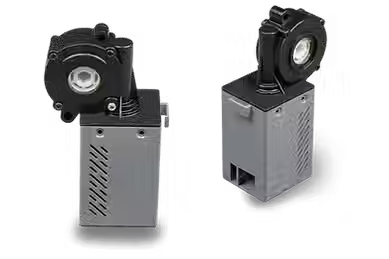
Hydraulic actuators utilize pressurized fluid to deliver high force and power, making them essential in construction and manufacturing. Their capacity for heavy loads often makes them indispensable in situations where significant force is needed. Moreover, hydraulic systems can operate at high speeds, enhancing productivity in various settings. In many applications where high load capacity is required, high speed is not enough. A drive solution with strong torque output is the key, and the Torque-focused Motor is designed to cope with high loads and high resistance environments, and maintains a stable and strong power output at low speeds, which is widely used in industrial automation, heavy machinery, and lifting and lowering systems in the smart home.
High force capabilities
Efficient load handling
Durability in tough conditions
These strengths make hydraulic actuators powerful assets in industrial operations, especially where heavy machinery is involved.
Actuator Type | Strengths | Common Uses |
Electromechanical | Precision, Speed | Robotics, Automation |
Hydraulic | High Force | Construction, Heavy Machinery |
Pneumatic | Response Time | Packaging, Sorting |
Pneumatic Linear Actuators
Pneumatic actuators use compressed air to generate linear motion. Their quick activation makes them suitable for applications requiring immediate responses. This type is often utilized in assembly lines and material handling systems, where speed and efficiency are paramount. Explore more insightful articles like this one – we have plenty more for you to discover here !
Fast operation
Lightweight design
Energy efficient
When choosing between linear actuator types, consider your specific application needs and operational environment for optimal performance.
How to Choose the Right Linear Actuator Type for Your Needs
When selecting the ideal linear actuator type for your specific applications, it is crucial to understand the various linear actuators types available. Each type has its unique features, advantages, and limitations that can significantly impact your project’s performance. Whether you need precise movement, high force, or simple operation, the right actuator can make all the difference.

Types of Linear Actuators
Among the numerous linear actuators types, electric, hydraulic, and pneumatic are the most common. Electric actuators are known for their high precision and control, hydraulic actuators excel in heavy-duty applications requiring significant force, while pneumatic actuators offer swift movements but lack the precision of electric types. Understanding these distinctions will guide your choice.
Factors to Consider
When choosing between the linear actuators types, several factors come into play. These include the required speed, load capacity, travel distance, and environmental conditions. Evaluate each factor meticulously to ensure optimal performance and longevity of your actuator.
Load capacity
Speed requirements
Environmental factors
Precision needs
Power source
Actuator Type | Advantages | Disadvantages |
Electric | High precision, easy control | Less force than hydraulic |
Hydraulic | High force, heavy payload | Complex setup |
Pneumatic | Fast operation | Low precision |
Conclusion
The choice of linear actuators types can impact your project’s success. Consider your unique application’s challenges and requirements before making a decision. Take the time to explore each actuator type to find the best fit for your needs.
“Selecting the right linear actuator type is crucial for ensuring efficiency and effectiveness in your projects.”
Applications of Various Linear Actuator Categories
Linear actuators are essential components in various industries, driven by their unique capabilities and diverse applications. Different types of linear actuators, including electric, pneumatic, and hydraulic, each serve specific functions in automation, transportation, and robotics. Understanding these linear actuator types is crucial for optimizing efficiency in operations.
Electric Linear Actuators
Electric linear actuators are widely used in applications that require precision and control. These actuators convert electrical energy into linear motion and are utilized in robotics, medical equipment, and automated manufacturing systems. Their advantages include low maintenance and the ability to integrate seamlessly into various setups, making them one of the most favored choices among linear actuator types.
Pneumatic Linear Actuators
Pneumatic linear actuators utilize compressed air to produce movement, making them suitable for applications requiring rapid actuation. They are commonly found in packaging machinery and material handling systems. Their ability to provide quick and repetitive motion makes them highly valuable in production lines, showcasing another pivotal category within linear actuators types.
Electric Actuators: Precision and low maintenance
Pneumatic Actuators: Fast and efficient in repetitive tasks
Hydraulic Actuators: High force applications like construction
The versatility of linear actuators can be further categorized in a structured manner. Below is a table summarizing the primary types based on their power source and applications.
Final Thoughts
Each type of linear actuator offers distinct advantages for specific use cases, ensuring that professionals can select the most suitable option for their needs. Whether you’re in search of speed, precision, or strength, understanding linear actuator types can enhance operational efficiency.
Explore more insightful articles like this one – we have plenty more for you to discover here!
Select the right actuator for your application needs.
Consider the environment and required motion control.
Explore all available options to optimize performance.
“Choosing the right linear actuator can significantly impact your system’s performance and reliability.”
Key Differences Between Linear Actuator Types Explained
Linear actuators play a crucial role in converting rotational motion into linear motion, making them vital in various applications. Understanding the different types of linear actuators is essential for selecting the right one for your specific needs. The primary linear actuators types include electric, pneumatic, and hydraulic, each with distinct functionalities and benefits. Exploring these differences helps to identify the most suitable actuator for both industrial and residential automation.
Electric Linear Actuators
Electric linear actuators are known for their precision and ease of use. They are powered by electricity and can be controlled via various input methods such as remote control or computer interfaces. Ideal for applications requiring precise motion control, these actuators are widely used in robotics, medical devices, and home automation systems. Their compact design and low maintenance requirements further enhance their appeal.
Pneumatic Linear Actuators
Pneumatic actuators utilize compressed air to create linear motion. They are typically faster and lighter compared to other types, making them suitable for applications that require high speed and quick response times. However, their reliance on air supply can limit installation locations. These actuators are commonly found in manufacturing and packaging processes.
Quick actuation
Low weight
Requires air supply
Hydraulic Linear Actuators
Hydraulic actuators are renowned for their incredible power and are often used in heavy-duty applications. They provide excellent force and can lift significant weights, but they require proper maintenance to prevent leaks. These actuators are essential in construction and automotive machinery.
High load capacity
Efficient for heavy machinery
Requires maintenance
Understanding the key differences between linear actuator types empowers users to make informed decisions for their specific applications.
To meet the ultimate in efficiency and responsiveness in modern applications, many engineers and designers are turning to more specialized powertrains. If you're looking for a drive solution that combines speed and stability, the Speed-focused Motor is the ideal choice. It not only improves overall operating efficiency, but also demonstrates superior acceleration and precise control in mission-critical applications.
Actuator Type | Power Source | Best Applications |
Electric | Electricity | Robotics, Home Automation |
Pneumatic | Compressed Air | Manufacturing, Packaging |
Hydraulic | Pressurized Fluid | Heavy Machinery |
Frequently Asked Questions About Linear Actuator Types
Linear actuators are essential components in various applications, bridging the gap between mechanical systems and precise control. These devices convert rotational motion into linear motion, making them crucial in robotics, manufacturing, and automation. Understanding different linear actuator types will help you select the right one for your project. Common types include electric, hydraulic, and pneumatic actuators, each serving unique functions.
If you have any questions or are interested in our products, feel free to contact us
What are Electric Linear Actuators?
Electric linear actuators utilize electric motors to create linear motion. They are favored for their precision and ease of control. With minimal maintenance requirements, these actuators are ideal for applications needing accurate positioning without the mess associated with hydraulic or pneumatic systems.
What are Hydraulic Linear Actuators?
Hydraulic linear actuators operate using pressurized liquids to generate force. This type is particularly powerful and is often used in heavy machinery or environments where significant force is necessary. While they offer high performance, they require more maintenance than electric counterparts.
Electric Actuators: Precise, low maintenance.
Hydraulic Actuators: Strong, used in heavy applications.
Pneumatic Actuators: Fast, ideal for repetitive tasks.
Choosing the right actuator type requires understanding your specific needs, such as force, speed, and control.
Type | Power Source | Primary Use |
Electric | Electric Motor | Robotics |
Hydraulic | Hydraulic Fluid | Heavy Machinery |
Pneumatic | Compressed Air | Automation |
How to Choose the Right Actuator?
Selecting an appropriate actuator type depends on various factors including load requirements, speed, and environment. Recognizing these aspects enables optimal performance and longevity.
Assess the required force.
Determine the necessary speed.
Consider the application environment.
"Selecting the correct linear actuator type is crucial for ensuring efficiency and effectiveness in mechanical systems."


Comments