Height Adjustable Workbenches : How Electric Lift Systems Are Redefining Production Line Ergonomics
Walk through a factory floor designed ten years ago and you'll find workbenches bolted to the floor at a fixed height — one setting, every shift, every worker, every task. Walk through a smart factory being designed today and you'll find something fundamentally different: workstations that move, adapt, and in some cases communicate with the broader manufacturing system around them.
The shift from fixed to adjustable isn't cosmetic. It reflects a deeper change in how leading manufacturers think about the relationship between worker health, production efficiency, and factory floor flexibility. Electric height adjustable workbenches sit at the center of that change — and understanding why requires looking at what fixed workstations actually cost, and what electric lift systems actually deliver.
The Short Answer
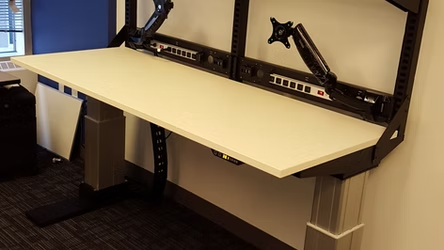
Height adjustable workbenches improve smart factory performance by adapting the workstation to the worker — not the other way around. Electric lift systems, powered by DC motors and linear actuators, allow workbench height to be changed in seconds, matching each worker's optimal ergonomic position for the specific task being performed. On smart factory production lines, this reduces musculoskeletal injury rates, improves output quality, supports flexible multi-model production, and increasingly integrates with IoT systems for data-driven workstation management. The result is a measurable improvement in both worker wellbeing and production efficiency — two goals that fixed workstations force manufacturers to trade off against each other.
Key Takeaways
✦ Fixed workstations force workers to adapt to the environment — height adjustable workbenches reverse that relationship, with measurable health and productivity benefits.
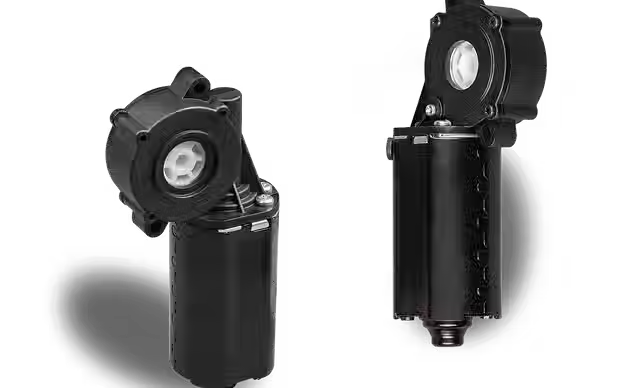
✦ Electric lift systems use DC motors — either brush or brushless — paired with linear actuators to deliver precise, repeatable height adjustment under industrial load conditions.
✦ Brushless DC motors (BLDC) are increasingly preferred in industrial workbench applications for their longer service life, lower noise, and higher duty cycle capability.
✦ Smart factory integration extends beyond height adjustment — IoT-connected workbenches can log usage data, enforce ergonomic protocols, and feed into broader manufacturing execution systems.
✦ The ROI case is concrete: reduced injury claims, lower absenteeism, higher throughput, and improved worker retention all contribute to payback periods that typically range from 12 to 36 months depending on application.
✦ Not all industrial adjustable workbenches are equal — load capacity, duty cycle, adjustment range, and motor quality vary significantly and must match the specific production environment.
✦ Implementation mistakes — wrong height range specification, inadequate load ratings, poor worker training — are the most common reasons adjustable workbench programs underdeliver.
The Problem with Fixed Workstations on Modern Production Lines
One Height Does Not Fit All Workers
The average fixed industrial workbench is designed around a theoretical average worker. In practice, production teams include workers of significantly different heights — and even the same worker performs differently when the workstation height is wrong for the task at hand.
A precision assembly task requires a different working height than a heavy component placement task. A seated inspection position requires a different height than a standing packaging operation. A worker who is 5'4" and a worker who is 6'1" performing the same task at the same fixed bench are both working in compromised ergonomic positions — just in opposite directions.
The consequence is not simply discomfort. It is cumulative physical strain that, over shifts and months, translates directly into musculoskeletal disorders (MSDs) — the single largest category of workplace injury in manufacturing environments globally.
The Hidden Cost of Poor Workstation Ergonomics
Musculoskeletal disorders — injuries to muscles, tendons, ligaments, nerves, and joints caused by repetitive strain, awkward posture, and sustained load — represent a significant and frequently underestimated cost center in manufacturing operations.
The direct costs are visible: workers' compensation claims, medical treatment, temporary labor to cover absent workers. The indirect costs are larger and less visible: reduced output quality from fatigued workers, higher error rates, increased supervision requirements, and the long-term cost of experienced worker turnover driven by physical attrition.
Facilities with chronic ergonomic problems also face elevated regulatory scrutiny. In many markets, occupational health regulators are increasingly focused on ergonomic risk assessment as a mandatory element of workplace safety compliance — not an optional improvement initiative.
Why Traditional Workbenches Are Incompatible with Smart Factory Goals
Smart manufacturing is built on flexibility, data, and continuous optimization. Fixed workstations contradict all three principles.
A fixed workbench cannot adapt when a production line shifts from one product model to another with different assembly requirements. It cannot accommodate an aging workforce that increasingly requires ergonomic support to remain productive. It generates no data about how work is being performed. And it cannot be reconfigured without physical modification — a significant cost and downtime burden in facilities that need to respond quickly to demand changes.
Height adjustable electric workbenches address each of these limitations directly.
What Is a Height Adjustable Workbench — and How Does the Electric Lift System Work?
The Core Mechanism: Electric Motor + Linear Actuator
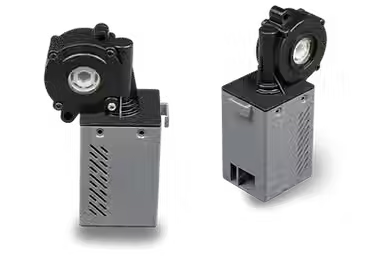
An electric height adjustable workbench operates through a straightforward but precisely engineered system. An electric motor — typically a DC motor — drives a linear actuator, which converts rotational motor output into linear vertical movement through a lead screw or ball screw mechanism housed inside the workbench leg column.
When the operator presses the height adjustment control, the motor activates, the lead screw rotates, and the column extends or retracts — raising or lowering the work surface smoothly and continuously until the target height is reached. In dual-column or four-column configurations, multiple motors operate in synchronized coordination to maintain a level work surface throughout the adjustment range.
The system is controlled by an electronic control unit (ECU) that manages motor speed, direction, synchronization between columns, and — in more sophisticated systems — memory presets, anti-collision detection, and IoT communication.

Brush DC Motor vs. Brushless DC Motor: Which Powers Industrial Workbenches?
This is a technical distinction that matters significantly in industrial deployment — and one that is frequently glossed over in product specifications.
Brush DC Motors (BDCM) use physical carbon brushes to transfer electrical current to the rotating armature. They are mechanically simpler, less expensive to manufacture, and easier to control with basic electronics. For this reason, they dominate entry-level and mid-range height adjustable workbench products. Their limitation in industrial settings is wear: the carbon brushes degrade with use, generating dust and eventually requiring replacement. In high-duty-cycle industrial environments — where workbenches are adjusted many times per shift — brush wear accelerates, and maintenance requirements increase.
Brushless DC Motors (BLDC) eliminate the physical brush contact by using electronic commutation — sensors detect rotor position and the control system switches current direction electronically. The result is a motor with no wearing contact parts, significantly longer service life, lower operating noise, higher energy efficiency, and better performance at sustained duty cycles.
For smart factory applications where workbenches are adjusted frequently throughout each shift and expected to perform reliably over years of continuous operation, BLDC motors represent the technically superior choice — despite their higher upfront cost.
Motor Comparison for Industrial Workbench Application:

Specification        │ Brush DC Motor    │ Brushless DC Motor
─────────────────────┼───────────────────┼───────────────────
Service Life         │ 10,000–20,000 ops │ 50,000–100,000 ops
Noise Level          │ 55–65 dB          │ 40–50 dB
Maintenance          │ Brush replacement │ Minimal
Efficiency           │ 75–85%            │ 85–95%
Initial Cost         │ Lower             │ Higher
Industrial Suitability│ Moderate         │ High
Dust Generation      │ Yes (carbon dust) │ No
Best For             │ Light commercial  │ Industrial/smart factory
Key Technical Specifications to Understand
When evaluating electric lift workbenches for industrial deployment, these specifications directly determine suitability:
Height Adjustment Range: Industrial workbenches typically offer a range of 650mm to 1,200mm (approximately 25" to 47"). The range must cover the ergonomic requirements of your full workforce — accounting for both seated and standing working positions.
Load Capacity: Rated in kilograms, this specifies the maximum weight the workbench can support while maintaining stable, controlled movement. Industrial applications — particularly those involving heavy components, tooling, or equipment — require minimum ratings of 150kg to 300kg or higher.
Adjustment Speed: Measured in mm/second. Industrial workbenches typically adjust at 25–50mm/s. Faster adjustment reduces production interruption time but may increase motor wear in brush designs.
Duty Cycle: The percentage of operating time the motor can sustain without overheating. A 10% duty cycle means the motor can run for 1 minute in every 10. High-frequency adjustment applications require motors with duty cycles of 20% or higher.
IP Rating: In environments with coolant mist, dust, or wash-down requirements, ingress protection rating determines whether the motor and control system can survive the operating environment.
How Height Adjustable Workbenches Fit Into Smart Factory Design
Integration with Industry 4.0 Infrastructure
The defining characteristic of Industry 4.0 manufacturing is connectivity — machines, systems, and workstations that communicate, share data, and enable real-time decision-making at every level of the production operation.
A height adjustable workbench in a conventional factory is a piece of furniture. A height adjustable workbench in a smart factory is a data node.
Advanced electric lift systems now include embedded controllers capable of communicating via industrial protocols — including OPC-UA, MQTT, and EtherNet/IP — with manufacturing execution systems (MES), enterprise resource planning (ERP) platforms, and factory floor management systems. This connectivity enables capabilities that fixed workstations cannot offer under any circumstances.
IoT Connectivity and Data Collection
Connected height adjustable workbenches generate operational data that has genuine value for factory management:
Adjustment frequency data reveals how often workers are changing height — a proxy for task variety, ergonomic compliance, and whether workers are actually using the adjustment capability or defaulting to a single fixed position.
Height profile data shows what heights are being used across the workforce. Significant deviation from ergonomically optimal heights for a worker's measured stature indicates training gaps or workstation configuration problems.
Usage pattern analysis can identify production rhythm disruptions — unusual clustering of adjustments at certain times may indicate a process problem, a quality issue, or a worker discomfort signal worth investigating.
Predictive maintenance signals from motor and actuator performance data can flag component wear before failure occurs — particularly valuable in operations where workbench downtime would halt a production cell.
Flexible Manufacturing and Mixed-Model Production Lines
Modern manufacturing increasingly demands the ability to produce multiple product models on the same production line — sometimes in rapid alternating sequence. This mixed-model production approach requires workstations that can reconfigure quickly as the product changes.
Height adjustable workbenches support this flexibility in two ways. First, the physical height can be reset to a task-appropriate position in seconds — not the minutes or hours required for manual adjustment of fixed-height equipment. Second, memory preset systems allow specific height configurations to be saved and recalled by job number, worker profile, or product model — effectively automating workstation reconfiguration as part of the broader line changeover sequence.
The Ergonomics Case: What the Science Says
Optimal Working Height by Task Type
Ergonomics research establishes clear relationships between working height and task performance. The appropriate workbench height is not a single number — it varies by task type, working posture, and individual worker anthropometry.
Task Type                    │ Optimal Height Relative to Elbow
─────────────────────────────┼───────────────────────────────────
Precision assembly / inspection│ 50–100mm above elbow height
Light assembly / manipulation │ At elbow height (±25mm)
Heavy manual work / pressing  │ 100–200mm below elbow height
Inspection with visual focus  │ Adjusted to bring work to eye level
Seated administrative tasks   │ Standard desk height principles apply
A height adjustable workbench allows the operator to dial in the correct height for the specific task being performed — rather than compromising across task types at a single fixed height.
Sit-Stand Protocols for Production Workers
Extended static standing is itself an ergonomic risk — it contributes to lower limb fatigue, varicose veins, and lower back discomfort. The evidence-based approach in occupational health is not "standing is better than sitting" but rather variation in posture throughout the shift.
Height adjustable workbenches enable sit-stand work protocols — structured alternation between seated and standing postures at defined intervals throughout the shift. Implementation typically follows a progressive approach: workers begin with 20–30 minute standing intervals alternating with seated periods, gradually increasing standing time as adaptation occurs.
The workbench's ability to transition from seated height (approximately 650–750mm) to standing height (approximately 900–1,100mm depending on worker stature) in seconds makes this protocol practically achievable on a production line in a way that fixed-height benches never could.
Musculoskeletal Injury Prevention on the Factory Floor
The connection between ergonomic workstation design and MSD reduction is well established in occupational health literature. Workstation height that requires sustained awkward posture — forward trunk flexion, shoulder elevation, neck flexion — is a primary risk factor for upper limb and back disorders in manufacturing workers.
Height adjustable workbenches directly reduce these posture-related risk factors by enabling each worker to set the workstation to their individual ergonomically appropriate position. This is particularly significant in facilities with diverse workforces — where height variation between workers may span 30cm or more — and in operations with high repetition rates where even small postural compromises accumulate rapidly over a shift.
Real Production Line Applications
Electronics Assembly Lines
Electronics assembly is perhaps the most ergonomically demanding production environment for upper limb health. Fine motor tasks — component placement, soldering, inspection, connector assembly — performed at high repetition rates over an extended shift create significant cumulative strain on wrists, hands, forearms, and shoulders.
In electronics manufacturing, height adjustable workbenches serve a dual purpose: they enable precise height matching for fine assembly work (which typically benefits from a slightly elevated working surface to bring the work closer to the worker's visual field), and they accommodate the mix of seated and standing work that modern EMS facilities increasingly build into their production protocols.
Anti-static (ESD-safe) work surface materials are a standard specification requirement in electronics production — a detail to confirm when specifying workbenches for this application.
Automotive Component Manufacturing
Automotive component assembly lines involve a wide range of task types — from fine fastener installation to heavy sub-assembly handling — often within the same production cell. The physical demands vary dramatically, and the workforce in automotive manufacturing tends to be diverse in terms of age, stature, and physical capability.
Height adjustable workbenches in automotive applications are typically specified with higher load capacities (150kg+) to accommodate heavy components and tooling, and with robust column designs that maintain stability under lateral load — which occurs when workers apply horizontal force during assembly operations.
Medical Device and Clean Room Production
Medical device manufacturing operates under strict regulatory requirements — including those related to ergonomics and workplace conditions that can affect product quality. Worker fatigue from poor ergonomics is recognized as a human factor that increases error rates and defect risk in precision medical device assembly.
Height adjustable workbenches in clean room environments require specific surface materials (typically stainless steel or specific polymers that withstand sterilization protocols), sealed column designs that minimize particulate generation, and control systems that can be cleaned without damage.
Warehouse and Logistics Workstations
Packing, sorting, and quality inspection workstations in warehouse and logistics environments serve workers across a full shift at high repetition. The combination of sustained standing, forward reach, and repetitive arm movement makes these stations a high-priority ergonomic intervention target.
Height adjustable workbenches in logistics applications are frequently paired with anti-fatigue matting, monitor arms, and modular accessory systems — creating a complete ergonomic workstation rather than simply a surface at the right height.
The Business Case: ROI of Electric Lift Workbenches
Injury Cost Reduction
Musculoskeletal disorders are expensive. Beyond direct medical and compensation costs, MSD-related absenteeism disrupts production scheduling, increases reliance on temporary labor, and creates quality risk when experienced operators are replaced by less familiar workers.
The financial case for ergonomic workstation investment is most clearly made by quantifying current MSD-related costs — compensation claims, sick days, temporary labor premiums, productivity losses — and comparing them against the capital cost and implementation expense of a height adjustable workbench program. Facilities with documented MSD problems in production areas consistently find this calculation favorable. [Facility-specific cost modeling is recommended; industry benchmarks vary significantly by sector and geography.]
Productivity and Throughput Gains
The relationship between ergonomics and productivity is direct: a worker operating in a compromised postural position fatigues faster, makes more errors, and works at lower output rates than the same worker at an ergonomically optimized workstation.
Studies in manufacturing ergonomics consistently show productivity improvements following ergonomic workstation upgrades — though the magnitude varies significantly by task type, prior ergonomic conditions, and implementation quality. [Source: peer-reviewed occupational ergonomics literature; specific figures should be validated against your production environment.]
Beyond individual worker productivity, height adjustable workbenches reduce line stoppages associated with MSD-related absenteeism — an often overlooked throughput factor.
Worker Retention and Recruitment Impact
In manufacturing labor markets where skilled operator availability is a genuine constraint, the physical sustainability of production work is a meaningful recruitment and retention factor. Facilities with a reputation for poor ergonomic conditions — chronic injury problems, physically demanding workstations — face higher turnover and greater difficulty attracting experienced workers.
Investment in ergonomic infrastructure, including height adjustable workbenches, is increasingly communicated by manufacturers as part of their employee value proposition — particularly when targeting experienced workers in competitive labor markets.
Total Cost of Ownership vs. Fixed Workstations
The upfront cost of electric height adjustable workbenches is higher than fixed alternatives — typically by a factor of 2x to 4x depending on specification level. The total cost of ownership calculation, however, must account for:
Fixed Workbench TCO          │ Adjustable Workbench TCO
─────────────────────────────┼────────────────────────────
Lower purchase price         │ Higher purchase price
Ergonomic modification costs │ No modification needed
MSD injury costs (ongoing)   │ Reduced MSD costs
Reconfiguration downtime     │ Rapid reconfiguration
Zero data capability         │ IoT data value
Worker fatigue productivity  │ Optimized productivity
  loss (ongoing)             │
Replacement at end of life   │ Longer service life (BLDC)
For most industrial applications, the payback period on height adjustable workbench investment — when MSD cost reduction and productivity improvement are properly quantified — falls in the range of 12 to 36 months. [Facility-specific ROI modeling is recommended.]
What to Look for When Specifying Industrial Height Adjustable Workbenches
Load Capacity and Stability
Rated load capacity must exceed the maximum weight the workbench will carry — including tools, components, equipment, and any fixtures mounted to the surface — with an appropriate safety margin. For heavy industrial applications, specify capacity generously; a workbench operating near its rated maximum will have reduced motor life and stability.
Lateral stability — resistance to tipping or rocking under horizontal force — is equally important in assembly applications where workers push or pull components across the work surface.
Adjustment Speed and Range
Specify an adjustment range that covers your full workforce population in both seated and standing postures. A range of 650mm to 1,250mm accommodates most adult populations in both postures.
Adjustment speed should be fast enough to minimize production interruption — 38mm/s to 50mm/s is appropriate for most industrial applications. Slower adjustment in heavy-duty models is a reasonable tradeoff for higher load capacity.
Motor Type and Duty Cycle
For industrial deployment, specify brushless DC motors where budget allows. The extended service life and reduced maintenance requirement justify the additional cost in high-use applications. Confirm the duty cycle rating matches your anticipated adjustment frequency.
For environments with dust, coolant mist, or chemical exposure, confirm that the motor and drive system carry an appropriate IP (Ingress Protection) rating — IP54 minimum for most industrial environments, IP65 or higher for wash-down applications.
Control Systems and Memory Presets
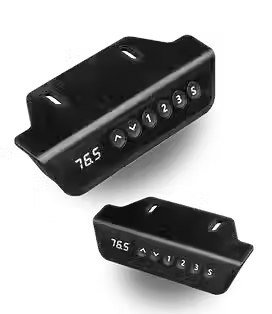
Industrial workbench control systems range from basic up/down buttons to sophisticated panels with multiple memory presets, digital height display, password protection, and network connectivity. Specify the control capability that matches your operational requirements:
Basic control: Manual up/down only — suitable for low-frequency adjustment environments
Preset control: 2–4 programmable height memory positions — suitable for multi-worker or multi-task deployment
Smart control: Network-connected, data-logging, integration-capable — suitable for smart factory environments
Surface Material and Modular Accessories
Work surface material selection should match the production environment: laminate for general assembly, stainless steel for food or pharmaceutical production, ESD-safe materials for electronics, hardwood or steel for heavy mechanical work.
Modular accessory compatibility — monitor arms, tool rails, lighting systems, power strips, drawer units — extends the workbench from a surface into a complete workstation system. Evaluate the accessory ecosystem available for any platform before committing to a specification.
Common Implementation Mistakes to Avoid
Specifying the wrong height range. Measure your actual workforce — not a theoretical average — before specifying adjustment range. A workbench that doesn't reach the correct seated height for shorter workers, or the correct standing height for taller workers, delivers no ergonomic benefit for those individuals.
Underspecifying load capacity. Production environments evolve. A workbench specified for today's product mix may need to carry heavier loads in 18 months. Build in margin.
Skipping worker training. A height adjustable workbench that workers don't know how to use — or don't use correctly — delivers no ergonomic benefit. Implementation must include training on individual height setting, sit-stand protocols, and the rationale behind the program.
Choosing brush motors for high-frequency applications. In environments where workbenches are adjusted multiple times per shift, brush motor wear will become a maintenance issue within 2–3 years. The upfront cost difference of BLDC motors is consistently recovered in reduced maintenance cost and extended service life.
Treating it as a one-time installation. Ergonomic workstation programs require ongoing management — periodic reassessment of height settings, monitoring of adjustment data in smart factory deployments, and regular worker feedback collection to identify problems before they become injury claims.
FAQ
Q: What is the typical adjustment range of an industrial height adjustable workbench?
Most industrial electric height adjustable workbenches offer a range of approximately 650mm to 1,250mm (25" to 49"). This range accommodates seated work for shorter workers at the low end and standing work for taller workers at the high end. For specific workforce populations, measure actual worker heights in both seated and standing postures to confirm the range is adequate before specifying.
Q: How often should workers adjust their workbench height during a shift?
The evidence-based recommendation for sit-stand work protocols is to change posture every 30 to 60 minutes — meaning a full shift may involve 8 to 16 height adjustments. This frequency is what makes duty cycle and motor type selection important in industrial deployment. A workbench adjusted this frequently requires a motor with a duty cycle and service life rated for sustained industrial use.
Q: Are height adjustable workbenches suitable for heavy-duty industrial applications?
Yes, with appropriate specification. Industrial-grade height adjustable workbenches are available with load capacities of 150kg to 500kg or higher, depending on the number and type of lift columns. Key factors for heavy-duty applications include the number of columns (four-column systems provide superior stability under load), motor type (BLDC for sustained duty), and frame construction material and gauge. Always specify capacity with a margin above the maximum anticipated load.
Q: Can height adjustable workbenches integrate with our manufacturing execution system (MES)?Higher-specification smart workbench systems support industrial communication protocols — including OPC-UA and MQTT — that enable integration with MES, ERP, and factory floor management platforms. This integration enables height setting data, usage frequency, and maintenance signals to flow into broader factory management systems. Confirm protocol compatibility with your MES vendor before specifying workbench control systems for this capability.
Q: What is the expected service life of an electric height adjustable workbench in an industrial setting?
Service life depends significantly on motor type, duty cycle, and maintenance practices. Workbenches with brushless DC motors, operated within their rated duty cycle and maintained according to manufacturer guidelines, are typically rated for 50,000 to 100,000 adjustment operations — which translates to 10+ years of service in most industrial applications. Brush DC motor systems in high-frequency applications may require brush replacement within 3 to 5 years. Frame and surface components typically outlast the drive system if not subjected to overload.
Q: How do we calculate the ROI of switching to height adjustable workbenches?
A practical ROI calculation should include: current annual MSD-related costs (compensation claims, medical expenses, temporary labor, lost productivity); projected reduction in those costs following workstation ergonomic improvement (typically 20–50% reduction, varying by application); productivity improvement value (output per worker-hour before and after); and total program cost (equipment, installation, training). Payback periods of 12 to 36 months are commonly achieved in applications with documented ergonomic problems. A baseline ergonomic risk assessment before implementation provides the most credible foundation for the calculation.
Final Thoughts
The fixed workbench is a legacy of an industrial model that prioritized simplicity over human performance. It assumed workers would adapt to the environment — and accepted the injury costs and productivity limitations that came with that assumption as a normal cost of manufacturing.
Smart factories are built on a different premise: that the environment should adapt to the worker, and that doing so consistently delivers better outcomes by every measurable standard — safety, quality, throughput, and workforce sustainability.
Electric height adjustable workbenches are not a luxury upgrade. In the context of smart factory design, they are an infrastructure decision — one that directly affects the ergonomic health of the workforce, the flexibility of the production line, and the quality of the data available for manufacturing optimization.


Comments