What Is An Actuator Used For?
Exploring Diverse Actuator Applications in Industry
Actuators play a crucial role in various industries, serving as essential components that convert energy into motion. Understanding the diverse actuator use applications can provide industry professionals with insights into optimizing processes and enhancing operational efficiency. From manufacturing to robotics, actuators are integral in both automated systems and traditional machinery, making them indispensable in today's technological landscape.

Common Applications of Actuators
Actuators are utilized in numerous applications across different sectors. In manufacturing, they control machinery movements, ensuring precision in tasks such as assembly and packaging. In the field of robotics, actuators enable movements of joints and limbs, allowing robots to perform complex tasks. Moreover, in the automotive industry, actuators manage components such as brakes and throttle controls, contributing to improved vehicle functionality. Here is our homepage
Benefits of Actuator Use Applications
The benefits of incorporating actuators in various applications are significant. They enhance operational efficiency, reduce energy consumption, and minimize manual labor. This not only streamlines production processes but also elevates workplace safety. Further, the ability to automate tasks using actuators means higher consistency and quality in output.
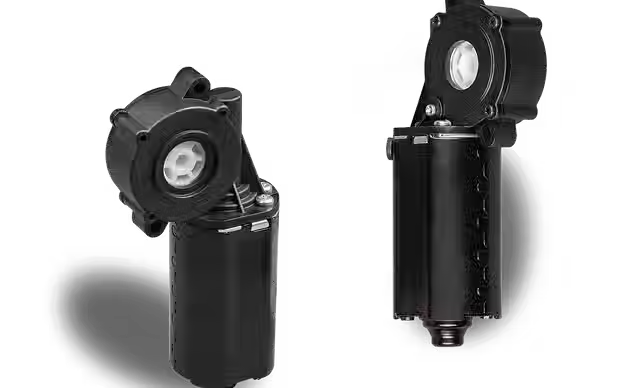
To meet the ultimate in efficiency and responsiveness in modern applications, many engineers and designers are turning to more specialized powertrains. If you're looking for a drive solution that combines speed and stability, the Speed-focused Motor is the ideal choice. It not only improves overall operating efficiency, but also demonstrates superior acceleration and precise control in mission-critical applications.
Manufacturing Automation
Robotic Movement
Automotive Controls
Aerospace Applications
HVAC Systems
Industry | Application | Type of Actuator |
Manufacturing | Automated Assembly | Electric Actuator |
Robotics | Joint Movement | Pneumatic Actuator |
Automotive | Throttle Control | Hydraulic Actuator |
Future Trends in Actuator Applications
The future of actuator technologies promises exciting advancements. With the rise of IoT and AI, smart actuators that adapt to environmental changes will become prevalent, further improving efficiency and reliability in applications.
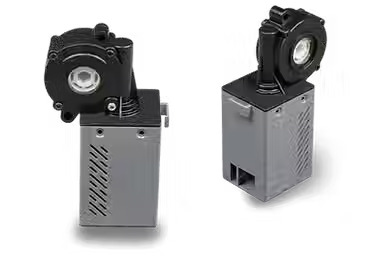
In many applications where high load capacity is required, high speed is not enough. A drive solution with strong torque output is the key, and the Torque -focused Motor is designed to cope with high loads and high resistance environments, and maintains a stable and strong power output at low speeds, which is widely used in industrial automation, heavy machinery, and lifting and lowering systems in the smart home.
Smart Actuation Systems
Energy-Efficient Designs
Integration with AI
“The evolution of actuator use applications signifies a shift towards smarter, more efficient industrial processes.”
Explore more insightful articles like this one – we have plenty more for you to discover here !
Key Benefits of Actuator Deployment in Systems
Actuators play a crucial role in various actuator use applications, effectively transforming control signals into physical motion. Whether in automation, robotics, or industrial systems, these devices enhance functionality and efficiency. By leveraging actuators, organizations can streamline operations and achieve greater precision in processes. Their deployment leads to improved response times and reduced manual intervention, underscoring their indispensable value in contemporary systems.

Enhanced Efficiency and Precision
One of the pivotal benefits of actuators is their ability to perform tasks with high accuracy. In industries like manufacturing and automotive, the integration of actuators allows for seamless automation. This not only boosts productivity but also minimizes errors associated with manual processes. As technology evolves, the precision of actuator use applications continues to improve, making them integral to modern machinery. Here is our homepage
Versatility Across Industries
Actuator use applications span multiple sectors, illustrating their versatility. They are essential in automotive systems for throttle control, in HVAC for temperature regulation, and in robotics for movement execution. This adaptability means that businesses from diverse industries can obtain tailored solutions that fit their specific needs. The following sectors illustrate the wide range of actuator applications:
Manufacturing
Aerospace
Transportation
Healthcare
Smart Homes
This table highlights a few actuator types and their applications:
Actuator Type | Application |
Pneumatic Actuator | Manufacturing automation |
Electric Actuator | Robotic movements |
Hydraulic Actuator | Heavy equipment control |
Cost-effectiveness in Operations
Integrating actuators into systems not only enhances operational efficiency but can also lead to substantial cost savings. By reducing energy consumption and optimizing workflow, businesses can see a decrease in overhead expenses. Actuator use applications contribute to long-term reliability and sustainability, bridging the gap between performance and cost.
Decreased maintenance costs
Lower energy consumption
Increased operational longevity
“Actuators are the heartbeat of modern machinery, empowering precise control and efficiency.”
Actuator Use Applications in Robotics Explained
Actuators are vital components in robotics, bridging the gap between the electronic control systems and the physical movements of a robot. The actuator use applications in robotics range from controlling motion and positioning to transforming energy into mechanical work. These devices are essential in enhancing the functionality and efficiency of robotic systems, enabling them to perform complex tasks easily.

Types of Actuators in Robotics
Various actuators are used in robotics, including electric, hydraulic, and pneumatic types. Each type of actuator has unique characteristics and advantages suited for specific applications. Electric actuators are known for their precision, hydraulic actuators offer high force capabilities, and pneumatic actuators provide rapid movement. Understanding these options is crucial for optimizing actuator use applications in robotic design.
Applications in Different Industries
Actuator use applications span multiple sectors, significantly impacting industries like manufacturing, medical, and aerospace. In manufacturing, robots equipped with actuators automate processes, improving speed and accuracy. In medical applications, robotic arms perform intricate surgeries with precision. The aerospace industry utilizes actuators for flight control systems, ensuring safety and performance.
Manufacturing
Medical Devices
Aerospace
Automotive Industry
Research and Development
Each industry leverages actuator technology to enhance operational efficiency. The selection of the appropriate actuator type can significantly influence the effectiveness of robotics in these applications.
Actuator Type | Advantages |
Electric | High precision and easy control |
Hydraulic | High force generation |
Pneumatic | Fast movement and low weight |
Future Trends in Actuator Use
The future of actuator use applications in robotics looks promising with advancements in smart technology and artificial intelligence. Innovations will enable actuators to become more adaptive, efficient, and capable of complex tasks. As robots evolve, so will the actuator technology that powers their functionalities.
Smart Actuators
AI Integration
Enhanced Efficiency
Miniaturization
"With the rise of intelligent systems, the evolution of actuator use applications will redefine the boundaries of robotics and automation."
Harnessing Actuators for Efficient Control Solutions
Actuators play a crucial role in various control applications, allowing for precise movement and operation across multiple industries. From automotive systems to robotics and automation, the versatility of actuator use applications showcases their importance in modern technology. Controlling machinery with high accuracy and efficiency ensures enhanced productivity levels while minimizing energy consumption. Understanding actuator types and their applications can significantly improve your operational capabilities.
Types of Actuators
There are several types of actuators, including electric, pneumatic, and hydraulic. Each type serves unique purposes and functions, often chosen based on specific application requirements. Electric actuators are suitable for precise control, while pneumatic actuators offer faster response times and lightweight solutions. Hydraulic actuators, on the other hand, provide immense power and force, making them ideal for heavy-duty applications. Understanding these differences is crucial when considering actuator use applications.
Applications Across Industries
Actuators find extensive use in a variety of sectors. Some common applications include:
Robotics and automation
Aerospace control systems
Manufacturing machinery
Automotive systems
This list showcases just a few of the vast opportunities to utilize actuators effectively.
Actuator Type | Best Use Applications |
Electric | Precise positioning in robotics |
Pneumatic | High-speed operations |
Hydraulic | Heavy lifting operations |
Emphasis on Efficiency
Utilizing actuators wisely enhances not only product effectiveness but also contributes to cost savings. Improved automation through these systems results in fewer manual interventions, allowing the workforce to focus on more strategic tasks. Companies that adopt actuators are often able to see significant growth in operational efficiency.
Cost reduction
Increased productivity
Enhanced safety
"Actuators are the backbone of automation, driving efficiency and innovation across all industries."
Case Studies: Actuator Applications in Real-World Scenarios
Actuator use applications span a multitude of industries, showcasing their versatility and significance. In automotive manufacturing, for instance, electric and pneumatic actuators are critical in enhancing production efficiencies. They facilitate efficient assembly line operations, allowing cars to be assembled with heightened precision and speed. This adaptation not only reduces labor costs but also improves the final product’s quality.
Robotics and Automation
In the realm of robotics, actuator applications are vital for precision movements and operational versatility. Companies leverage pneumatic and servo actuators to arm robotic systems, empowering them to perform intricate tasks. This power enables robots to undertake welding, painting, and assembly, thus streamlining processes in manufacturing settings.
Aerospace Industry
The aerospace sector utilizes actuator use applications for critical flight control systems. Actuators manage surfaces like flaps and ailerons, directly influencing aircraft maneuverability. This technology promotes both safety and performance, ensuring reliable operations at high altitudes and speeds.
Automotive Manufacturing
Robotics and Automation
Aerospace Industry
Marine and Offshore Applications
These case studies illustrate the diverse actuator use applications across various fields, evidencing their pivotal role in modern technology.
Industry | Application | Actuator Type |
Automotive | Assembly Lines | Pneumatic |
Robotics | Precision Tasks | Servo |
Aerospace | Flight Control | Electric |
Marine and Offshore Applications
Additionally, the marine industry heavily relies on actuators for controlling thrusters and stabilizers on ships. Such actuator applications enhance navigation control and overall vessel stability in challenging maritime environments.
Enhanced Navigation
Improved Vessel Stability
“Actuators are the unsung heroes that drive innovation across various industries, reinforcing their essential role in technological advancement.”
Frequently Asked Questions About Actuator Applications
Actuators play a crucial role in various industries, driving numerous applications through their ability to convert energy into motion. Understanding the diverse actuator use applications can help you determine which type fits your project requirements. From manufacturing to robotics, the possibilities are vast, prompting many common inquiries about their purposes and functionalities.
What Are the Common Applications of Actuators?
Actuators are used in a wide array of applications, ranging from simple mechanical systems to complex automation setups. Common uses include robotics, automotive systems, aerospace control, and industrial automation. Each application requires specific actuator types to ensure optimal performance. Knowing your application’s needs will significantly influence the selection process.
How Do Actuators Differ by Type?
Different actuator types, such as electrical, pneumatic, and hydraulic, exhibit unique characteristics tailored to specific applications. Electrical actuators, for example, provide precise motion control, making them ideal for robotics and automated assembly lines. In contrast, pneumatic and hydraulic actuators deliver high power in smaller sizes, suitable for heavy machinery.
Robotics
Aerospace Control Systems
Industrial Automation
Automotive Applications
The table below summarizes various actuator types alongside their suitable applications.
Actuator Type | Typical Applications |
Electric | Robotics, HVAC systems |
Pneumatic | Packaging, automotive assembly |
Hydraulic | Construction, manufacturing |
Why is Actuator Selection Important?
Choosing the right actuator affects the overall efficiency of your system. Selecting an actuator based on application requirements can greatly reduce energy costs and enhance operational reliability.
Improves performance efficiency
Reduces operational costs
Increases reliability
"Selecting the appropriate actuator can significantly impact various applications, improving efficiency and achieving desired outcomes."


Comments