Are Industrial Motors Ac Or Dc?
Explore Various Types of Industrial Motors
Understanding the various types of industrial motors is crucial for selecting the right one for your specific application. Each type of industrial motor serves a unique purpose and offers different advantages, making them essential in numerous sectors. Let's delve into the main industrial motors types to help you make an informed choice.

AC Motors
AC motors are widely utilized in industrial applications due to their durability and efficiency. These motors convert alternating current into mechanical energy, making them suitable for various tasks, from driving fans to pumps. The two subtypes, synchronous and asynchronous, both cater to specific operational needs, ensuring optimized performance in different settings.
DC Motors
DC motors offer excellent speed control and are vital in robotics and electric vehicles. With their capability to provide high torque at low speeds, they are particularly useful in applications requiring precise movement. Their simple design also translates to maintenance ease, promoting prolonged operational reliability.
Stepper Motors
Brushless DC Motors
Servo Motors
Additionally, specialized options such as stepper and servo motors are excellent for precision tasks, making them popular in automation technologies.
Motor Type | Application | Advantages |
AC Motors | Pumps, Fans | High durability, Low maintenance |
DC Motors | Robotics, Electric Vehicles | Precision control, High torque |
Motors Ac Or Dc
To gain the most from industrial motors, understanding their types and applications is pivotal. Consider your operational needs carefully before selecting a motor type to maximize efficiency and effectiveness.
Consult with an expert.
Evaluate your requirements.
Research motor specifications.
Choosing the right industrial motor can significantly enhance your operations and productivity.
Understanding Electric Motor Varieties
When exploring the numerous industrial motors types available today, it’s essential to comprehend their unique functionalities and applications. Motors vary not only in size but in design and efficiency, making some more suited for specific tasks than others. Each variant serves a distinct purpose in various industrial settings, impacting productivity and operational costs. Understanding these industrial motors types can help in making informed decisions that can enhance efficiency and performance.

Types of Electric Motors
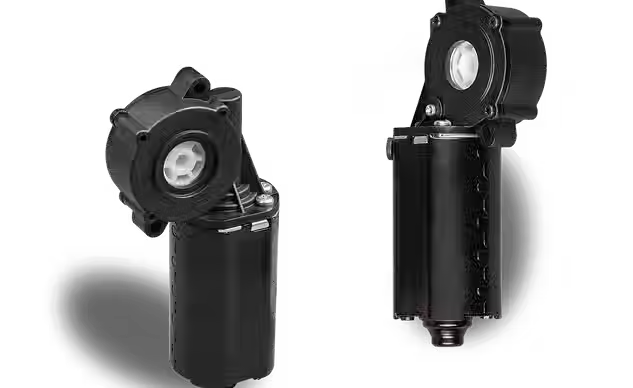
Among the key industrial motors types, you will encounter AC (Alternating Current) motors and DC (Direct Current) motors. AC motors are predominantly used due to their efficiency, low maintenance needs, and ability to operate at high speeds. On the other hand, DC motors are praised for their excellent speed control and torque capabilities, particularly in applications that require precise movement. To meet the ultimate in efficiency and responsiveness in modern applications, many engineers and designers are turning to more specialized powertrains. If you're looking for a drive solution that combines speed and stability, the Speed-focused Motor is the ideal choice. It not only improves overall operating efficiency, but also demonstrates superior acceleration and precise control in mission-critical applications.
Key Features and Applications
The selection of motor types depends on application-specific features. For example, variable speed drives might be necessary for precise manufacturing processes, while constant-speed applications may utilize standard induction motors. In many applications where high load capacity is required, high speed is not enough. A drive solution with strong torque output is the key, and the Torque -focused Motor is designed to cope with high loads and high resistance environments, and maintains a stable and strong power output at low speeds, which is widely used in industrial automation, heavy machinery, and lifting and lowering systems in the smart home. Understanding the operational environment is vital for the effective application of industrial motors types.
AC Motors: Commonly used for fans and pumps.
DC Motors: Ideal for robotics and electric vehicles.
Stepper Motors: Suited for precise positioning tasks.
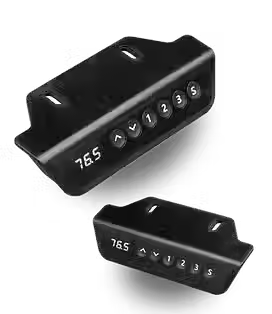
Knowing the right type of motor for your needs can enhance productivity. 4 Buttons DC Motor Controller provides efficient, intuitive operation for a compact, functionally focused motorized control system. Commonly used in power recliners, lift tables, or nursing equipment, the controller supports basic raise/lower or open/close operation, combined with DC motors for stable, responsive posture adjustment.4 Buttons DC Motor Controller
Motor Type | Efficiency | Control |
AC Motors | High | Limited |
DC Motors | Medium | Excellent |
Stepper Motors | Variable | Precise |
Conclusion
In the world of industrial motors types, understanding the differences is crucial. Identifying your specific application needs will lead you to the right motor solution. With the growing demand for efficient, low-noise and long-life motors, the Brushless DC Motor has become the core power source in many modern devices. With less friction loss and higher energy efficiency, they are widely used in power tools, home appliances, medical equipment, and smart furniture, making them an ideal upgrade alternative to traditional brushed motors.
Assess your application requirements.
Consider power supply options.
Evaluate space constraints.
“Choosing the right motor type is not just a technical decision; it’s a strategic move for long-term success in industrial operations. Explore more insightful articles like this one – we have plenty more for you to discover
Key Differences in Industrial Motor Styles
Industrial motors types encompass a variety of designs, each tailored for specific functions and environments. Understanding these differences is crucial for choosing the right motor for your industry needs. From electric motors to hydraulic systems, the options available vary significantly, impacting efficiency, performance, and application suitability.

Types of Electric Motors
Electric motors are prevalent in various industrial settings. They are divided into two major categories: AC (Alternating Current) and DC (Direct Current) motors. AC motors are known for their efficiency and longevity, making them ideal for constant speed applications. In contrast, DC motors offer speed control and high torque at lower speeds, suitable for applications requiring precise movements.
Servo and Stepper Motors
For applications needing high precision, servo and stepper motors are exceptional choices. Servo motors provide closed-loop control, ensuring accurate position and speed regulation, while stepper motors operate in discrete steps, making them perfect for tasks that require controlled motion.
AC Motors
DC Motors
Servo Motors
Stepper Motors
Motor Type | Application | Advantages |
AC Motor | Pumps, Fans | Efficiency, Low Maintenance |
DC Motor | Conveyors, Robotics | Speed Control, High Starting Torque |
Choosing the Right Motor
Selecting the appropriate industrial motor types can dramatically affect operational efficiency and output. Consider factors like power supply, load requirements, and installation conditions for the best results.
Power Requirements
Load Characteristics
Environmental Conditions
“Understanding the key differences in industrial motor styles can simplify the selection process, ensuring optimal performance in industrial applications.”
How to Choose the Right Motor for Your Industry
Selecting the appropriate motor for industrial applications is critical for optimizing performance. Industrial motors types vary widely, and understanding these differences can significantly affect operational efficiency. From AC motors to DC motors, each type has unique characteristics suited for specific purposes. Before making a selection, consider factors such as operational environment, load requirements, and control systems applicable within your industry standards.

Understanding Different Industrial Motor Types
To make an informed choice, it's essential to grasp the fundamental industrial motors types. AC motors, for instance, excel in applications requiring a constant speed, whereas DC motors offer more precise speed control. Recognizing these distinctions helps businesses avoid costly mistakes when purchasing motors. Always ensure that the motor you choose aligns with your specific operations to prevent inefficiencies.
Key Features to Consider
When evaluating motors, certain key features come into play. Look for efficiency ratings, torque characteristics, and required maintenance levels. These factors greatly affect overall production costs and equipment longevity. Here’s a quick list of critical features:
Efficiency Ratings
Torque Characteristics
Maintenance Requirements
Operational Environment
Load Capacity
Motor Type | Best Use | Key Feature |
AC Motor | High-Speed Applications | Constant Speed |
DC Motor | Variable Speed Applications | Speed Control |
Final Thoughts
Choosing the right motor is more than just a mechanical decision; it involves strategic planning and understanding your operational needs. Always consult with experts when in doubt, as the right guidance can prevent future setbacks.
Explore more insightful articles like this one – we have plenty more for you to discover here !
AC Motors
DC Motors
Stepper Motors
Servo Motors
“Selecting the ideal motor can enhance your operational efficiency and reduce costs significantly.”
Benefits of Different Motor Types in Manufacturing
In the world of manufacturing, understanding the various industrial motors types is essential for optimizing productivity and efficiency. Each motor type has its own advantages that cater to distinct processes. For example, AC motors are renowned for their reliability and low maintenance, while DC motors excel in precision control. Recognizing the unique benefits of each can help organizations make informed choices that align with their operational needs.

AC Motors
AC motors are often preferred due to their robustness and ability to handle high-power applications. They are suitable for various manufacturing settings, from conveyor systems to large machinery. Furthermore, AC motors are energy-efficient, contributing to lower operational costs over time.
DC Motors
Conversely, DC motors provide incredible torque at low speeds, making them ideal for applications requiring precise speed control. They are frequently used in automated systems and robotics. Their ability to deliver instantaneous power can significantly enhance production speed and accuracy.
AC motors: Strong, energy-efficient.
DC motors: Torque-rich, precise control.
Understanding these industrial motors types inherently promotes better decision-making in machine selection. The right motor can lead to enhanced operational efficiency and reduced costs in the manufacturing process.
Motor Type | Benefits |
AC Motor | Reliable, low maintenance, energy-efficient |
DC Motor | High torque, excellent speed control |
Choosing the Right Motor
Selecting the appropriate motor is critical. Consider factors like application, cost, and efficiency when making your choice. Don’t overlook the specific needs of your manufacturing operations.
Assess application requirements.
Evaluate energy consumption.
"The right industrial motor type can revolutionize your manufacturing processes."
Top Applications for Industrial Motor Types
Industrial motor types play a vital role in powering numerous applications across various sectors. They are crucial for machinery in manufacturing, process control, and automation. Different motors, such as AC and DC motors, serve unique functions, optimizing efficiency and performance in their respective roles. Understanding the applications of these industrial motors can help engineers and businesses choose the right type for their needs tailored for specific environments. If you have any questions or are interested in our products, feel free to contact us. Here is our homepage

AC Motors
AC motors are widely used in industrial settings due to their reliability and durability. These motors are designed to run on alternating current, making them perfect for applications requiring constant speed. Common sectors utilizing AC motors include HVAC systems, conveyor belts, and pumps, where consistent performance is vital for operational efficiency. To meet the ultimate in efficiency and responsiveness in modern applications, many engineers and designers are turning to more specialized powertrains. If you're looking for a drive solution that combines speed and stability, the Speed-focused Motor is the ideal choice. It not only improves overall operating efficiency, but also demonstrates superior acceleration and precise control in mission-critical applications.
DC Motors
DC motors are favored for applications needing precise speed control and high starting torque. Industries such as robotics, electric vehicles, and material handling solutions predominantly rely on these motors. Their ability to provide variable speed options allows for greater flexibility in dynamic environments. In many applications where high load capacity is required, high speed is not enough. A drive solution with strong torque output is the key, and the Torque-focused Motor is designed to cope with high loads and high resistance environments, and maintains a stable and strong power output at low speeds, which is widely used in industrial automation, heavy machinery, and lifting and lowering systems in the smart home.
HVAC systems
Conveyor systems
Robotics
Motor Type | Applications |
AC Motor | HVAC, Conveyors |
DC Motor | Robotics, EVs |
Conclusion
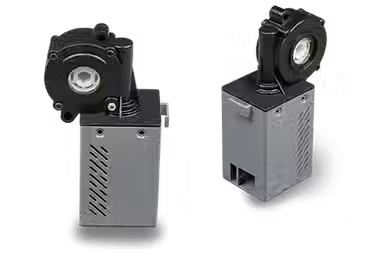
By understanding the strengths of different industrial motors types, businesses can make informed decisions that enhance productivity. Selecting suitable motors impacts overall efficiency and operational cost management. The adjustability and stability of hospital beds in healthcare environments have a direct impact on patient comfort and care efficiency, and the HDM Actuator for Hospital Bed has been designed for hospital use, with silent operation, high load capacity, and multi-stage precision adjustments that provide powerful and reliable power support for modern hospital beds, helping to build a more humanized and intelligent healthcare space. Explore more insightful articles like this one – we have plenty more for you to discover
Efficiency leading to cost savings
Improved reliability
"Investing in the right industrial motor type can significantly streamline operations and boost productivity."
Frequently Asked Questions About Motor Categories
Industrial motors types encompass a wide range of options, each designed for specific applications. Understanding these types can help industries select the right motor for their needs. Common categories include AC motors, DC motors, and specialized motors, like servo motors and stepper motors. Each motor type has distinct characteristics and uses, making it vital for businesses to choose wisely.
1. What are the main categories of motors?
Motors are primarily categorized based on their power source, construction, and application. The most common categories include:
AC (Alternating Current) Motors: Powered by alternating current. These are widely used in household appliances and industrial equipment.
DC (Direct Current) Motors: Powered by direct current. They are often used in applications where variable speed control is necessary, such as in electric vehicles and robotics.
Step Motors: Used for precise control of position and rotation, commonly found in 3D printers and CNC machines.
Universal Motors: Can run on either AC or DC and are typically used in vacuum cleaners and power tools.
Synchronous Motors: Operate at a constant speed, regardless of load, and are used in applications requiring precise speed control.
2. What are the differences between AC and DC motors?
The main difference between AC and DC motors is the type of current they use:
AC Motors: These motors are more commonly used in large-scale industrial applications due to their durability and efficiency at high power levels.
DC Motors: Provide better speed control, which is ideal for applications where adjustable speeds are needed.
3. What is the difference between brushed and brushless DC motors?
Brushed DC Motors: Use carbon brushes to deliver current to the motor's armature, which can result in wear and tear over time.
Brushless DC Motors: Use electronic controllers instead of brushes, offering higher efficiency, longer lifespan, and reduced maintenance.
4. What are the advantages of using a stepper motor?
Stepper motors are known for their precision and accuracy. They divide a full rotation into a series of smaller steps, allowing for:
High precision in positioning and rotation
Controlled movement at low speeds
Easy integration with digital systems for applications like 3D printers and robotics


Comments